Launched in 1966 as The Australian Gourmet Magazine, Gourmet Traveller remains Australia’s leading title for the best in food, wine and travel. Our readers rely on us to entertain, inspire and inform them with our view on cooking, dining, travel and style.
This year, I’ve been reflecting on our past in each issue, noting the openings, the closures, the trends and the stylistic changes through which the magazine has evolved. Cultural change, waves of architecture and design, Australia’s quest toward its own food identity and the impact of international events on travel have all been covered. Some familiar faces, like Stephanie Alexander, Neil Perry and Guillaume Brahimi, continue to feature in Gourmet Traveller today.
Gourmet Traveller in the 1960s
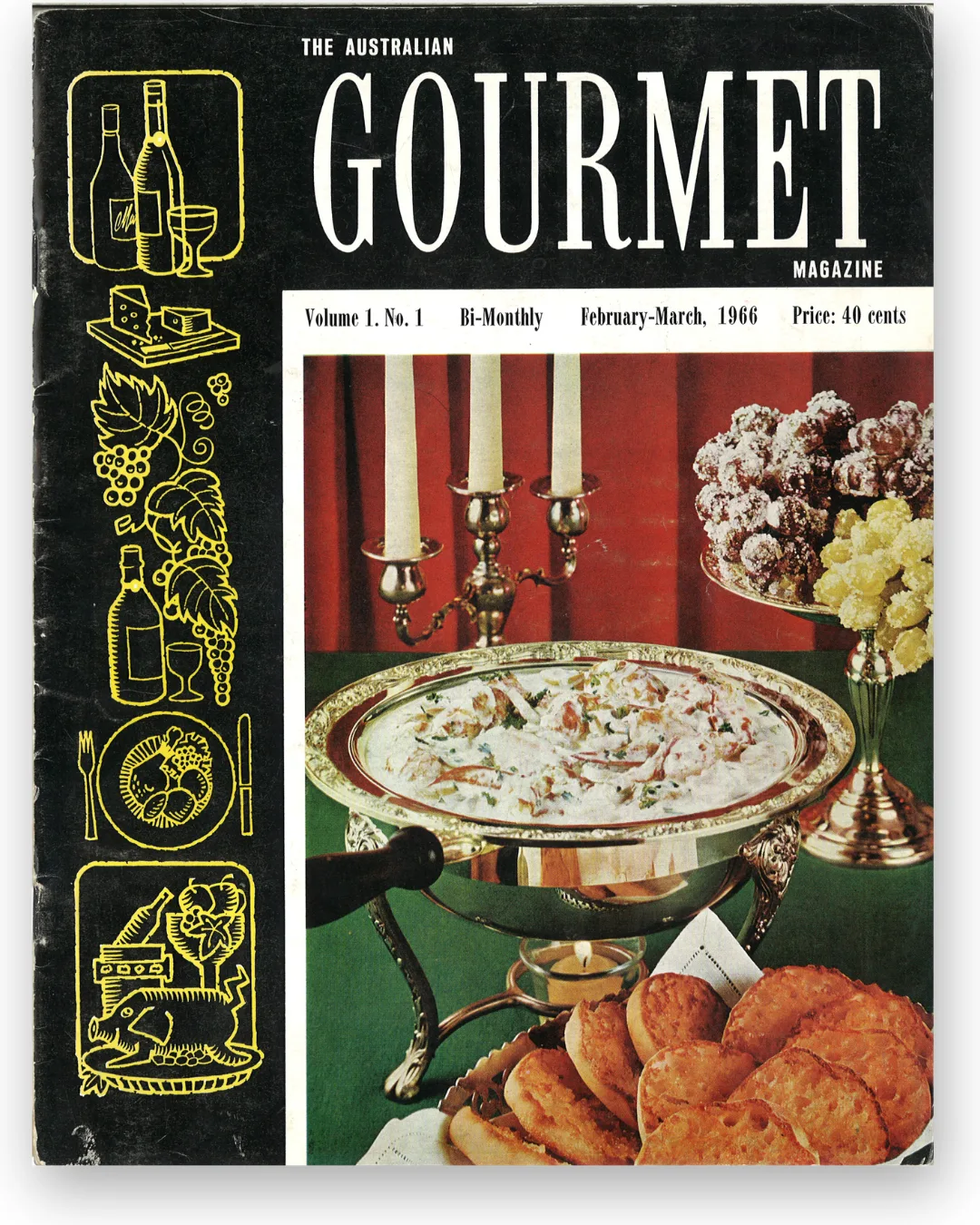
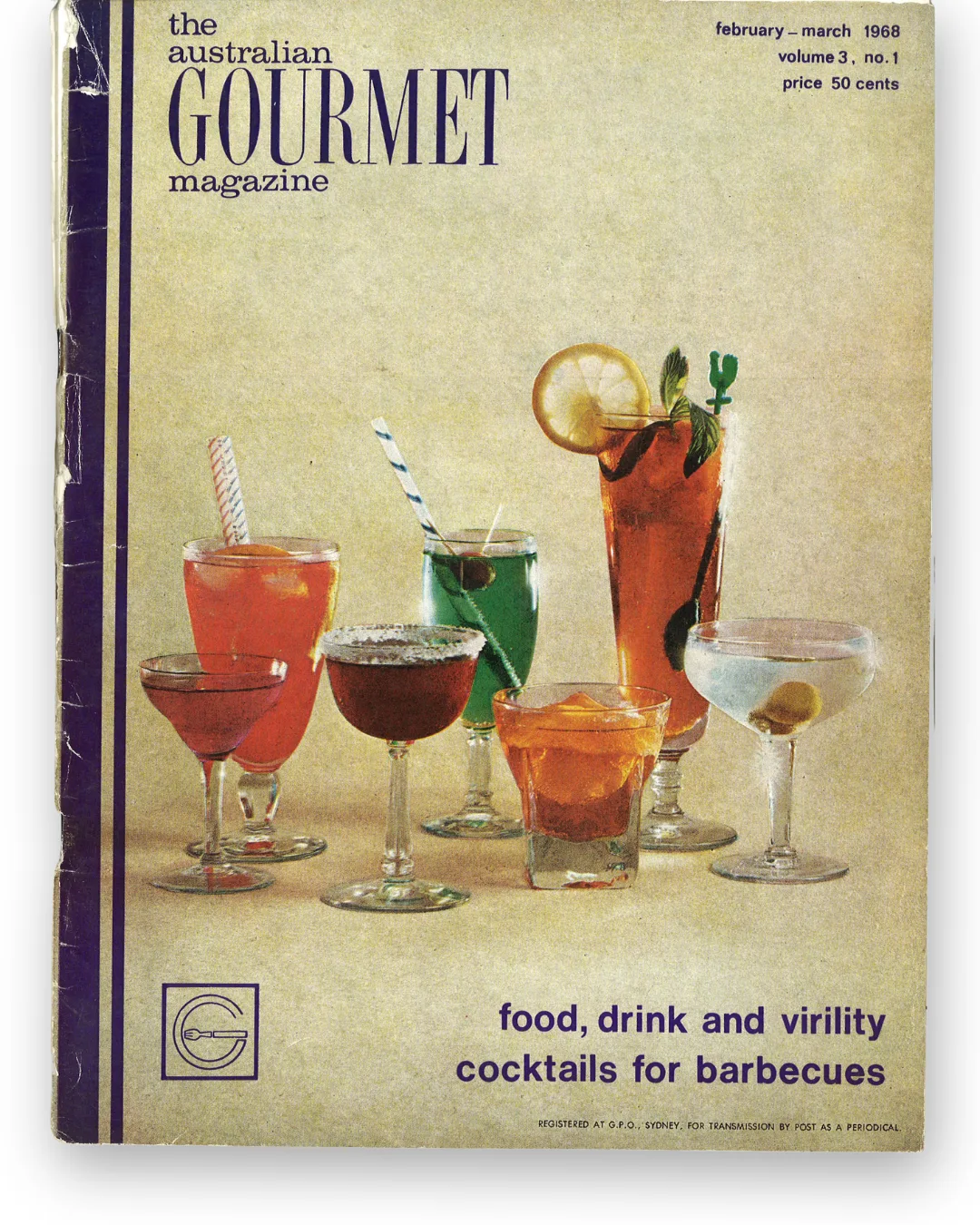
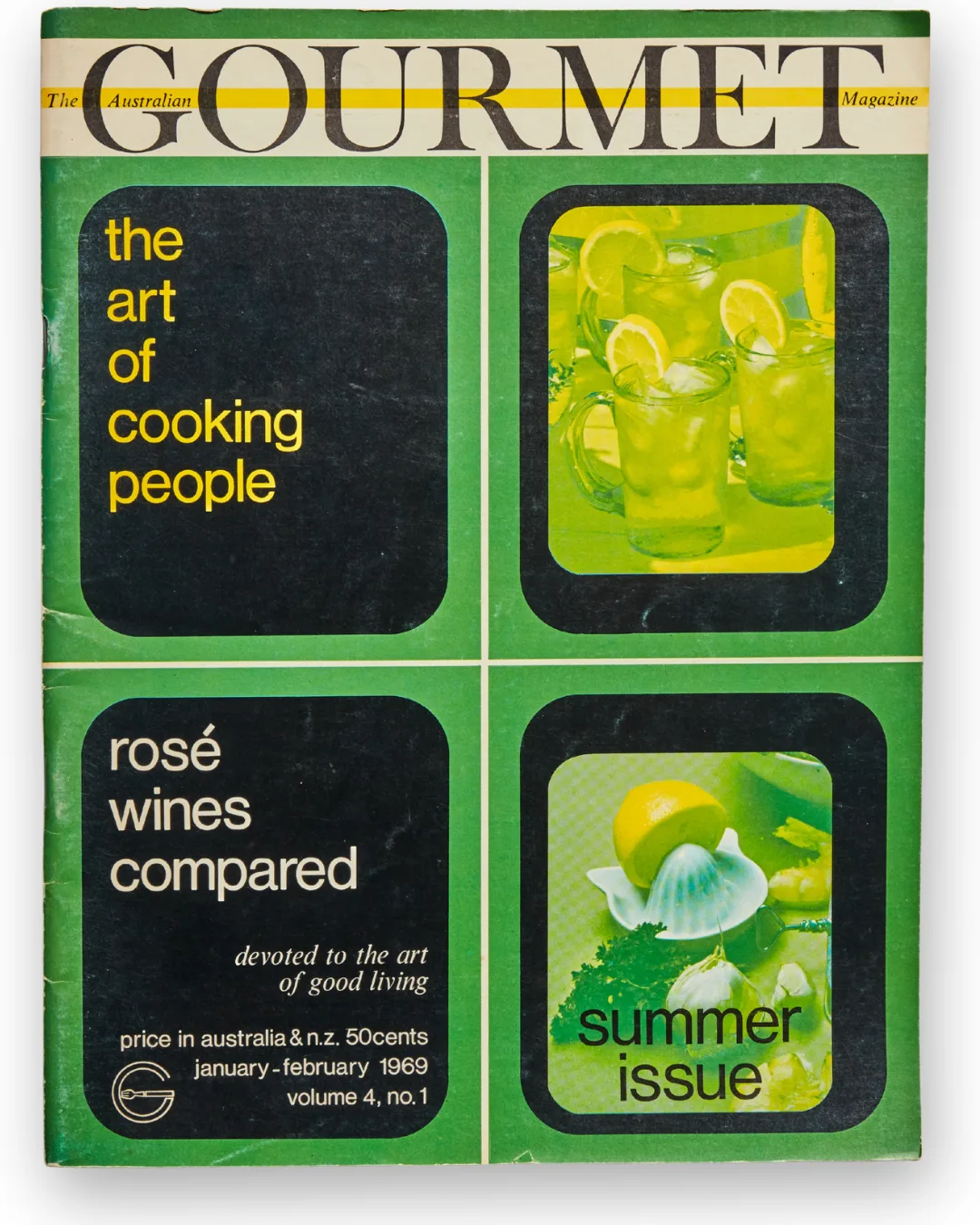
No, your eyes DO not deceive you. That cover line in the top left corner of the January-February 1969 issue of The Australian Gourmet Magazine – as we were called then – refers to an article about eating people. Human people. Let me take this opportunity to reassure our younger readers that in the 1960s, people generally did not eat other people. Elsewhere in the issue was a story by wine merchant Dan Murphy – yes, the man himself. Meanwhile, one thing that’s becoming clear, in trawling the archives, is the prevalence of mayonnaise in the first few decades of the magazine. In this edition, the subject was tackled with Musings of a Mayonnaise Snob by Mary Burchett. Having read the story, I’ve no doubt Ms Burchett and I would get along famously.
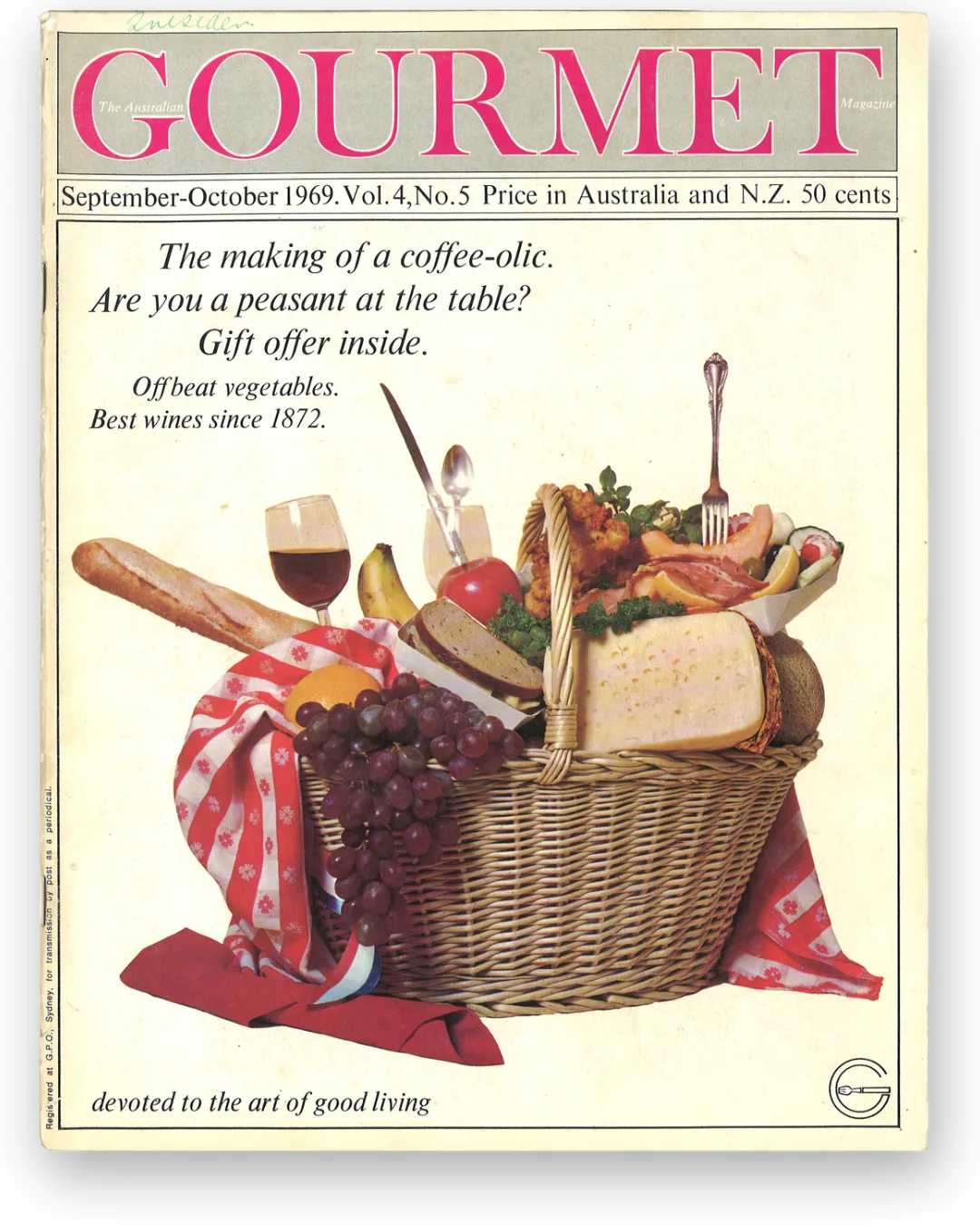
If there’s one thing I’ve learnt from delving into the Gourmet Traveller back catalogue over the past year, it’s not to look too closely at the words – particularly in some of the early issues. The language used to describe certain elements doesn’t always meet today’s accepted standards, as in an April-May 1968 story on what to serve at a house-warming party. “The liquid refreshment side is best left to the man of the house and his personal knowledge of the drinking habits and capabilities of his friends,” the article advises, before helpfully suggesting that “the hostess can prepare these appetising titbits…” Apparently, first-home buyers in 1968, who presumably had just moved into a house, had enough money left over for such luxuries as lobster and crab, as well as sufficient leisure time to make their own pâté.
Although not highlighted on the cover, this issue also contains several stories extolling the virtues of Australian cheese. One goes so far as to quote French cheese expert André Simon, who declares that Australian cheese is not only very good, “it is better than imported cheese”. Incroyable!
Gourmet Traveller in the 1970s
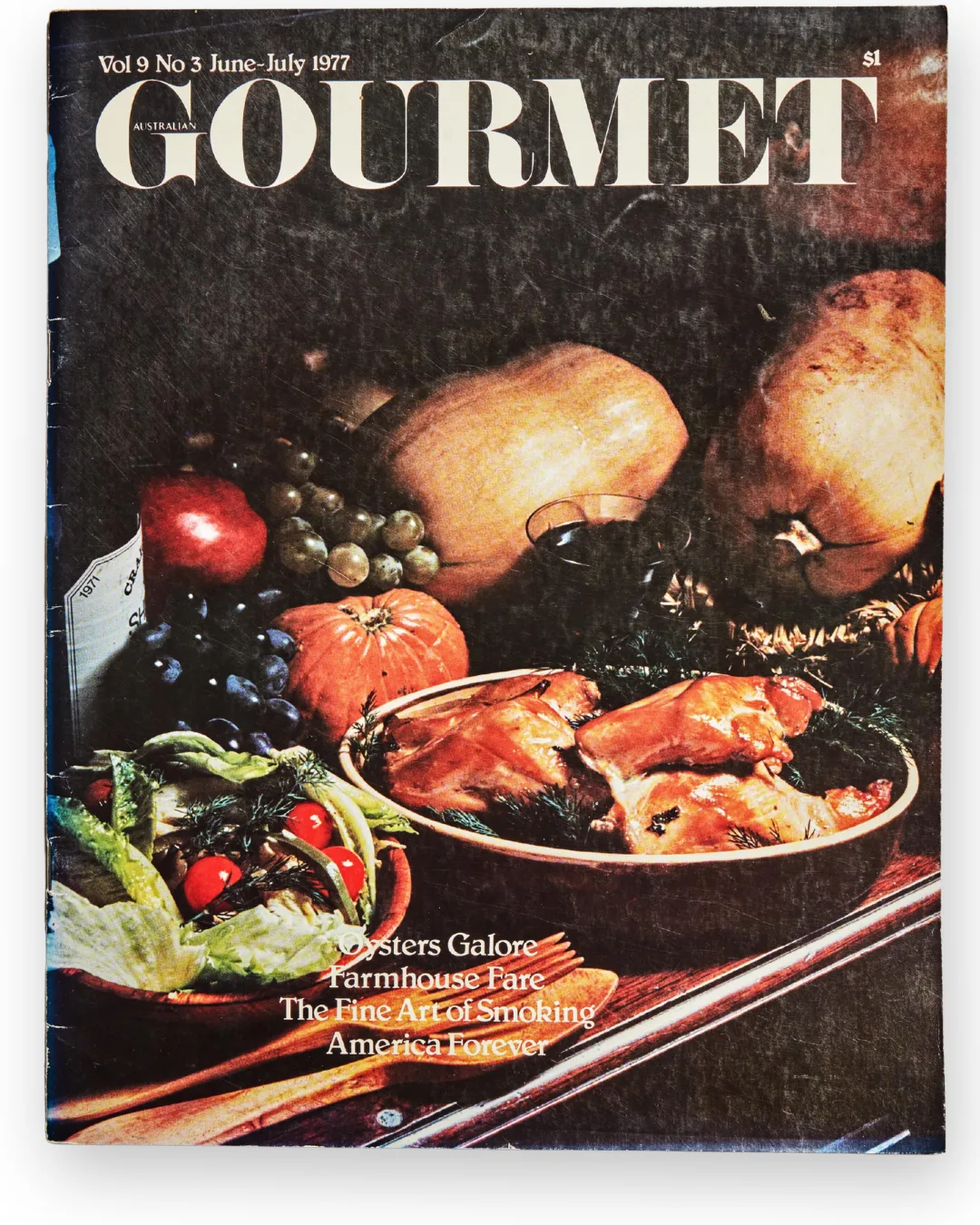
The last boardroom lunch I attended consisted of a tray of sandwiches and a fruit platter. If the June-July 1977 issue of Australian Gourmet is anything to go by, boardroom lunches in the ’70s were a more elevated affair. For this edition, ad man and food writer Leo Schofield teamed up with chef Patric Juillet to create a meal fit for a working lunch at the advertising agency of Schofield Sherbon Baker. On the menu was quail and asparagus tart, fresh lime sorbet in Champagne and a terrine de coquilles St Jacques au Madere. Schofield’s take on upcoming food trends was: “We will all be thinking thin!” No, not fat shaming; it was just his way of suggesting that thick, heavy sauces were out, and simply cooked fish and fowl were in.
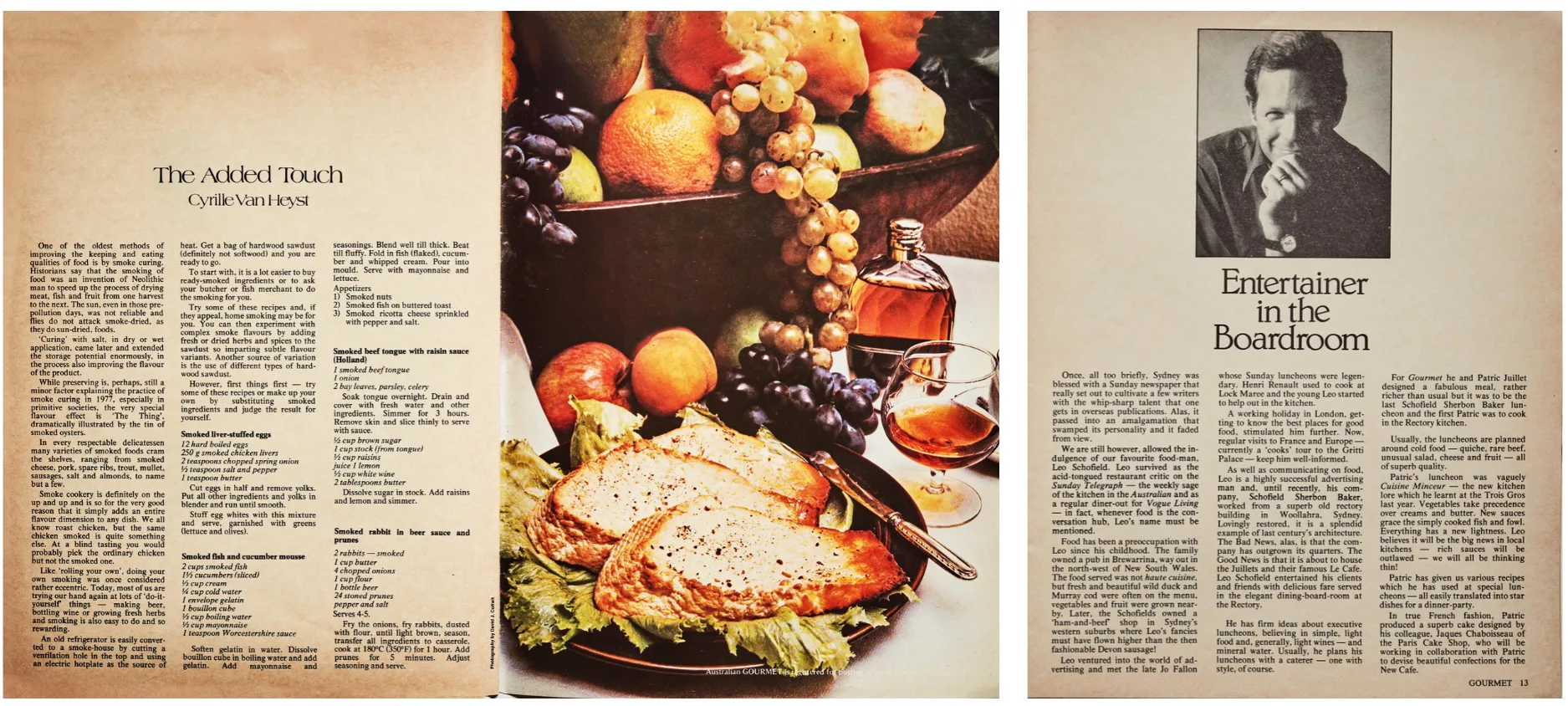
The other big thing was smoking your own food. Cyrille Van Heyst created a menu for readers complete with advice on methods of DIY smoking. “An old refrigerator is easily converted to a smoke-house by cutting a ventilation hole in the top and using an electric hotplate as the source of heat. Get a bag of hardwood sawdust … and you are ready to go.” Our advice today: don’t try this at home.
Gourmet Traveller in the 1980s
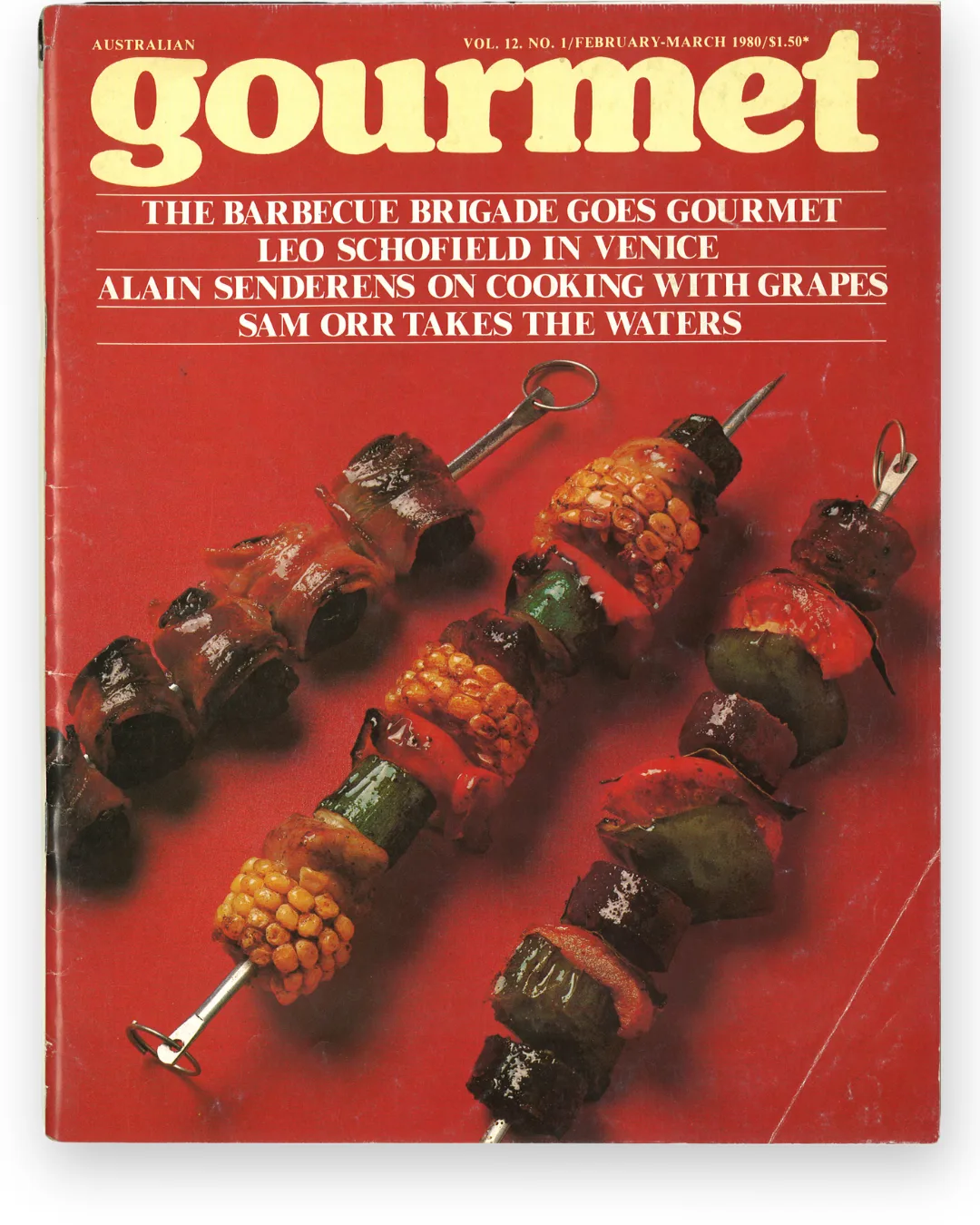
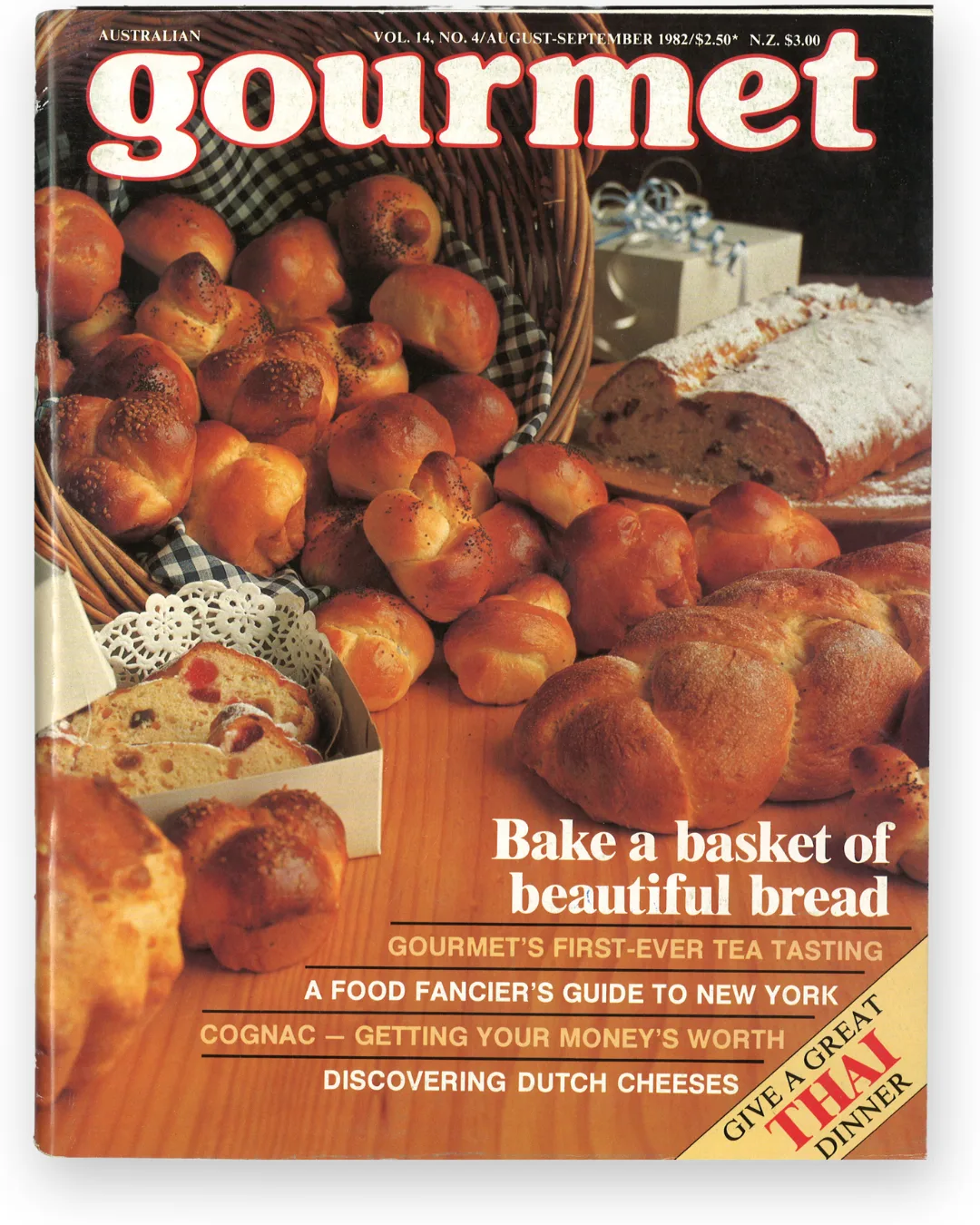
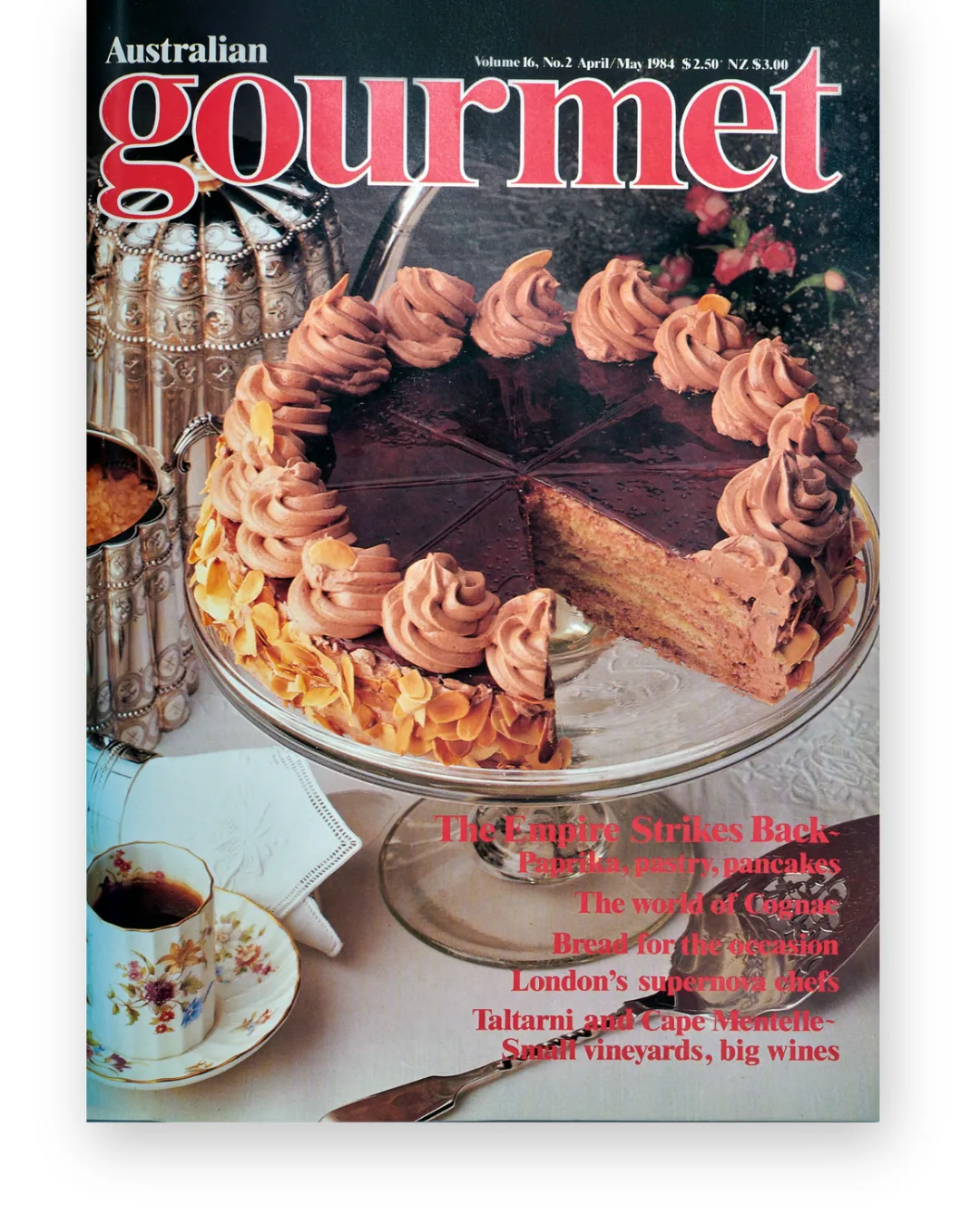
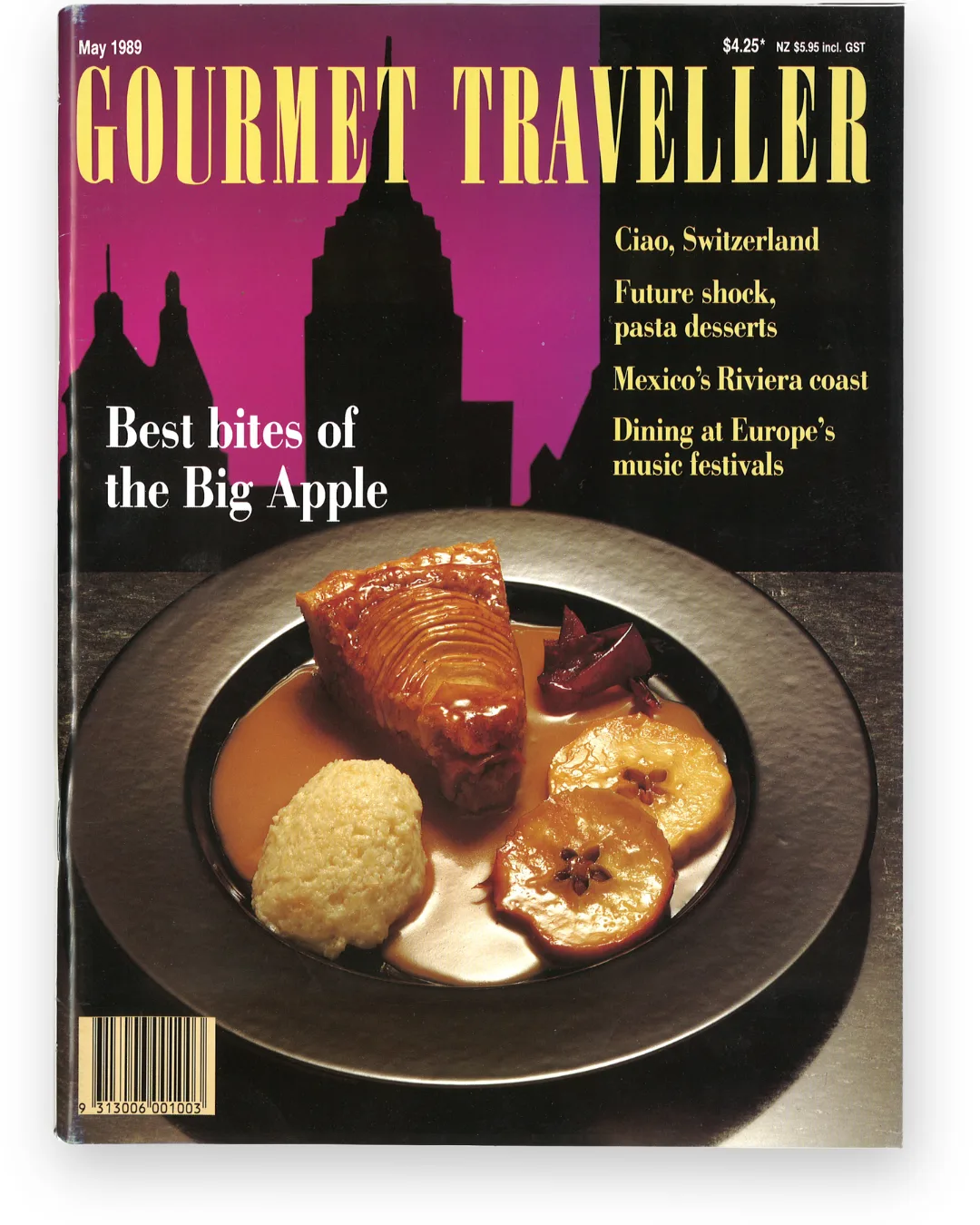
Gourmet Traveller in the 1980s had a regular feature each month teaching readers how to cook with their new-fangled microwave ovens, it introduced them to wonderful “new” herbs like basil, and strange dishes such as sushi. Meanwhile, based on the advertising, it seems we were a nation of chain-smokers and whisky drinkers. Good times.
The May 1986 edition declared “The cocktail party is back!”. I’m old enough to remember the mid-1980s and I don’t recall cocktail parties ever falling out of favour. The canapés themselves included chèvre and green onion tartlets, steak tartare balls, Liptauer-stuffed squash and ratatouille triangles. Arranged in meticulous geometric formations, each appears perfectly spaced, as though a ruler might have been used in the plating process.
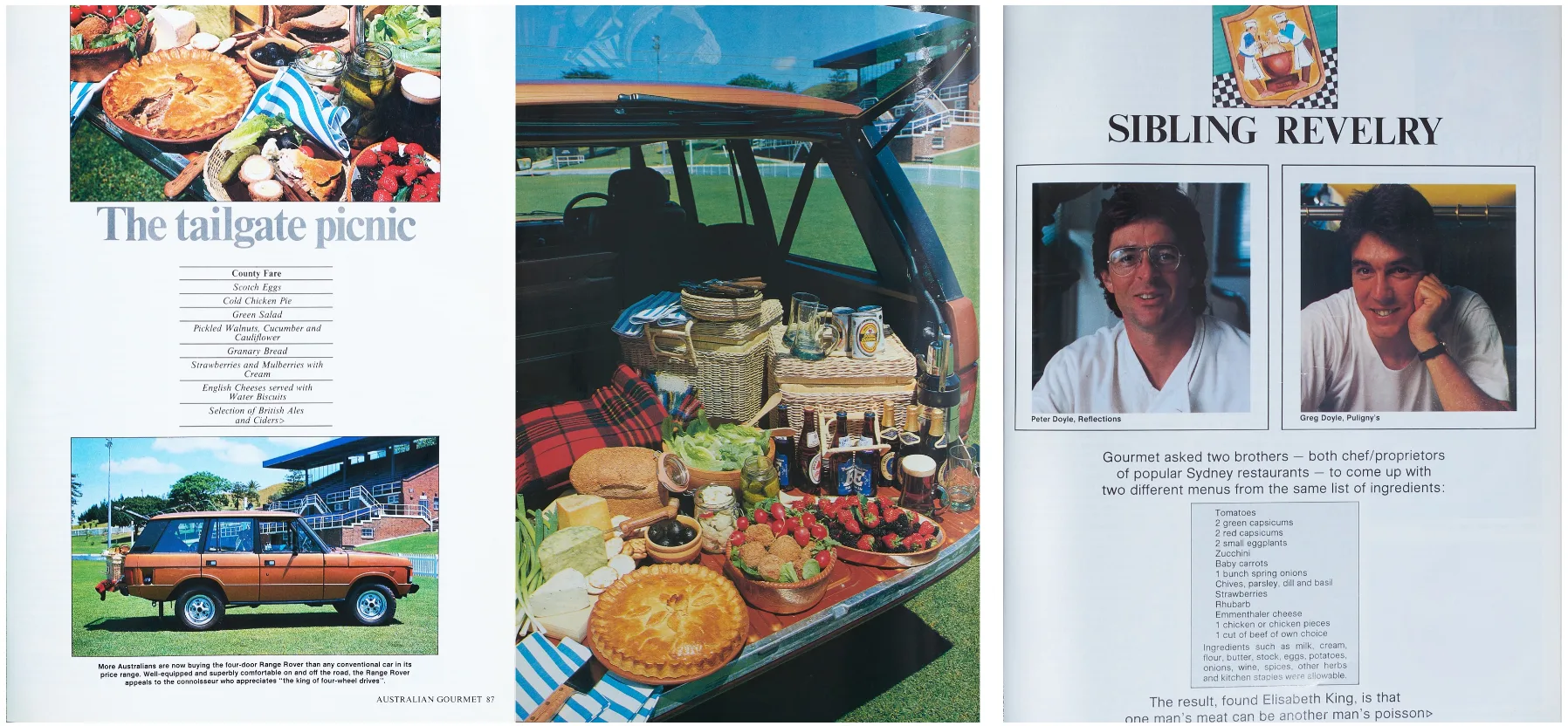
The issue also revived memories of something I miss from Australia’s dining scene: Marigold Restaurant on Sussex Street in Sydney. Two decades ago, when I worked nearby, I visited the celebrated Chinese restaurant at least once a week. One restaurant I never managed to visit was Chez Oz. It was among Sydney’s most fashionable dining rooms and, as a young journalist, well beyond my budget. Securing a table was notoriously difficult, which makes it amusing to read Gourmet’s review and discover that main courses were priced between $16 and $17. Equally revealing is the magazine’s description of a 1973 Beaune Cent Vignes Château de Meursault at $57.50 a bottle as “stratospheric”. By today’s standards, that price is positively affordable.
Gourmet Traveller in the 1990s
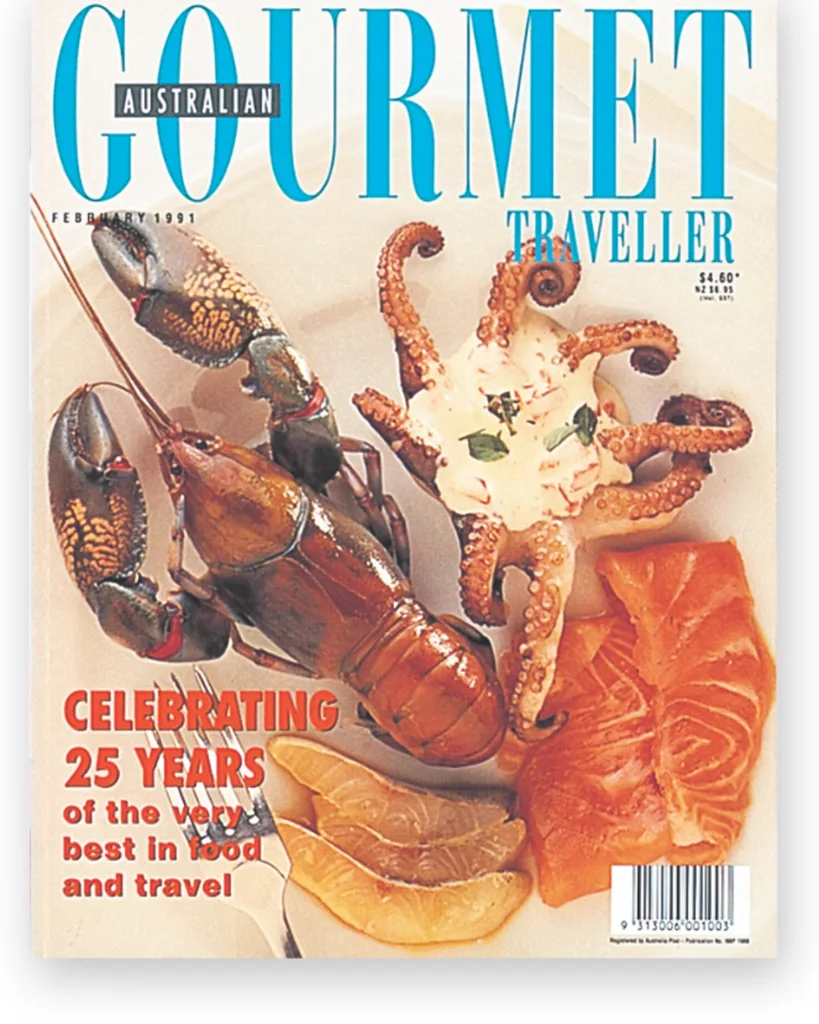
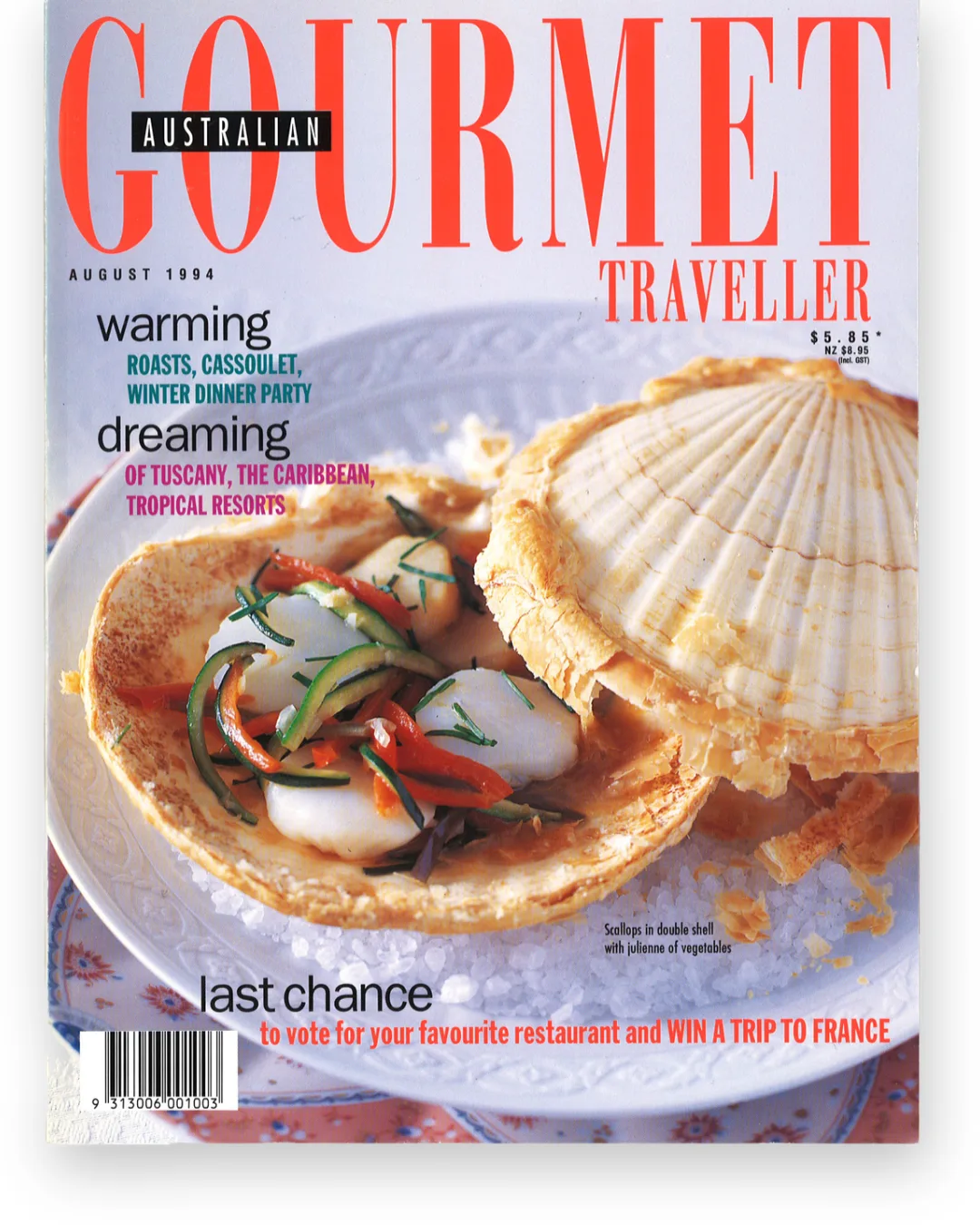
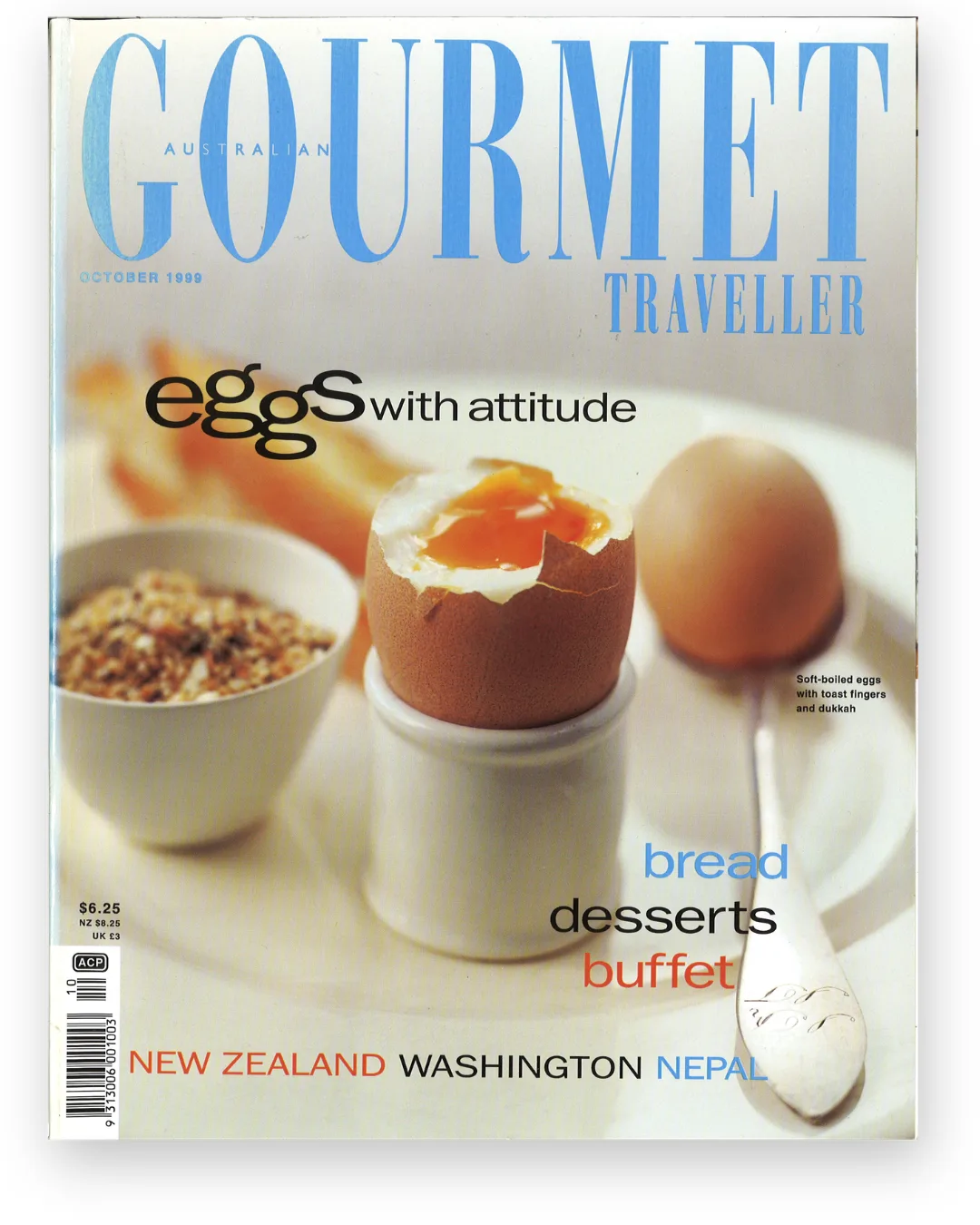
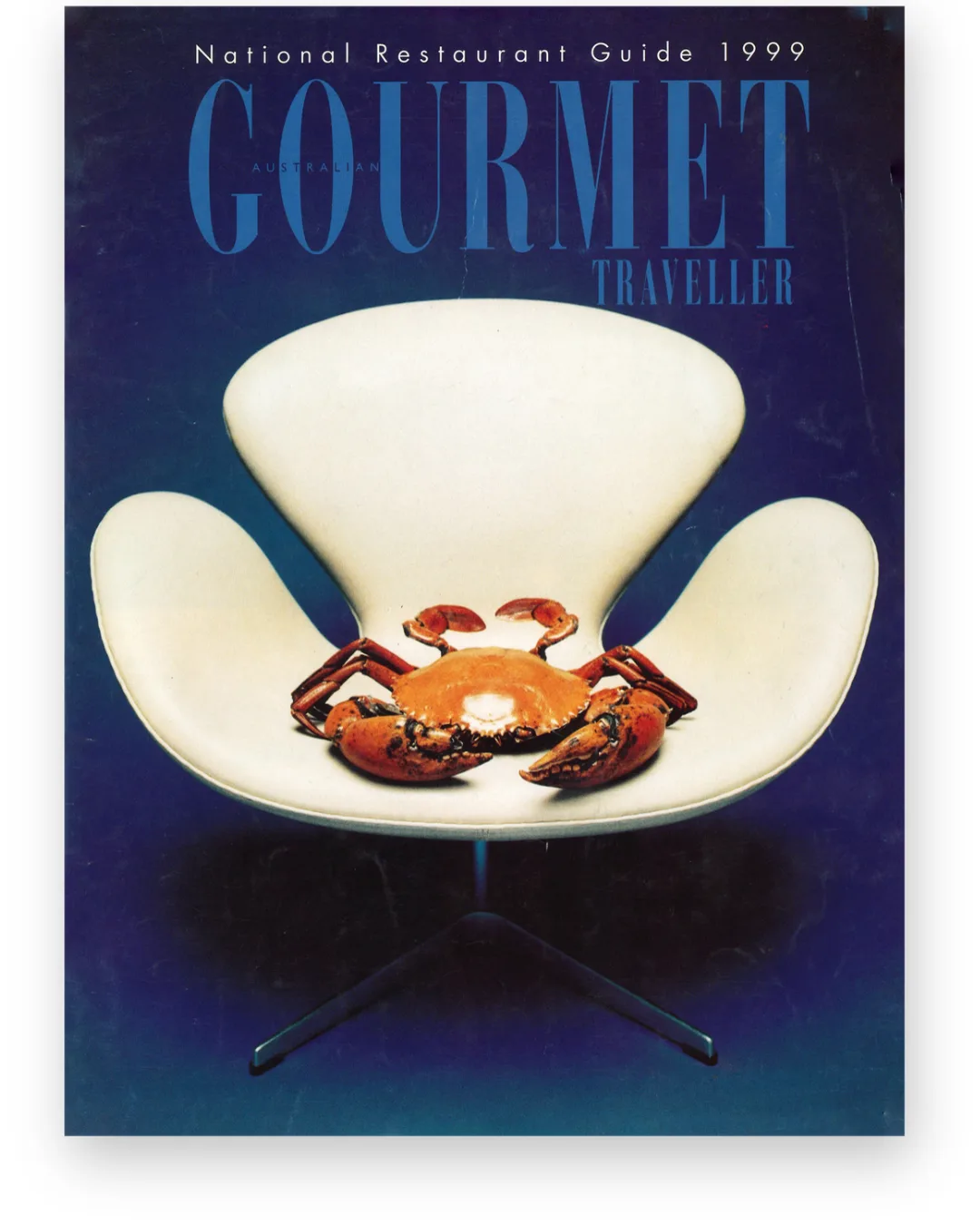
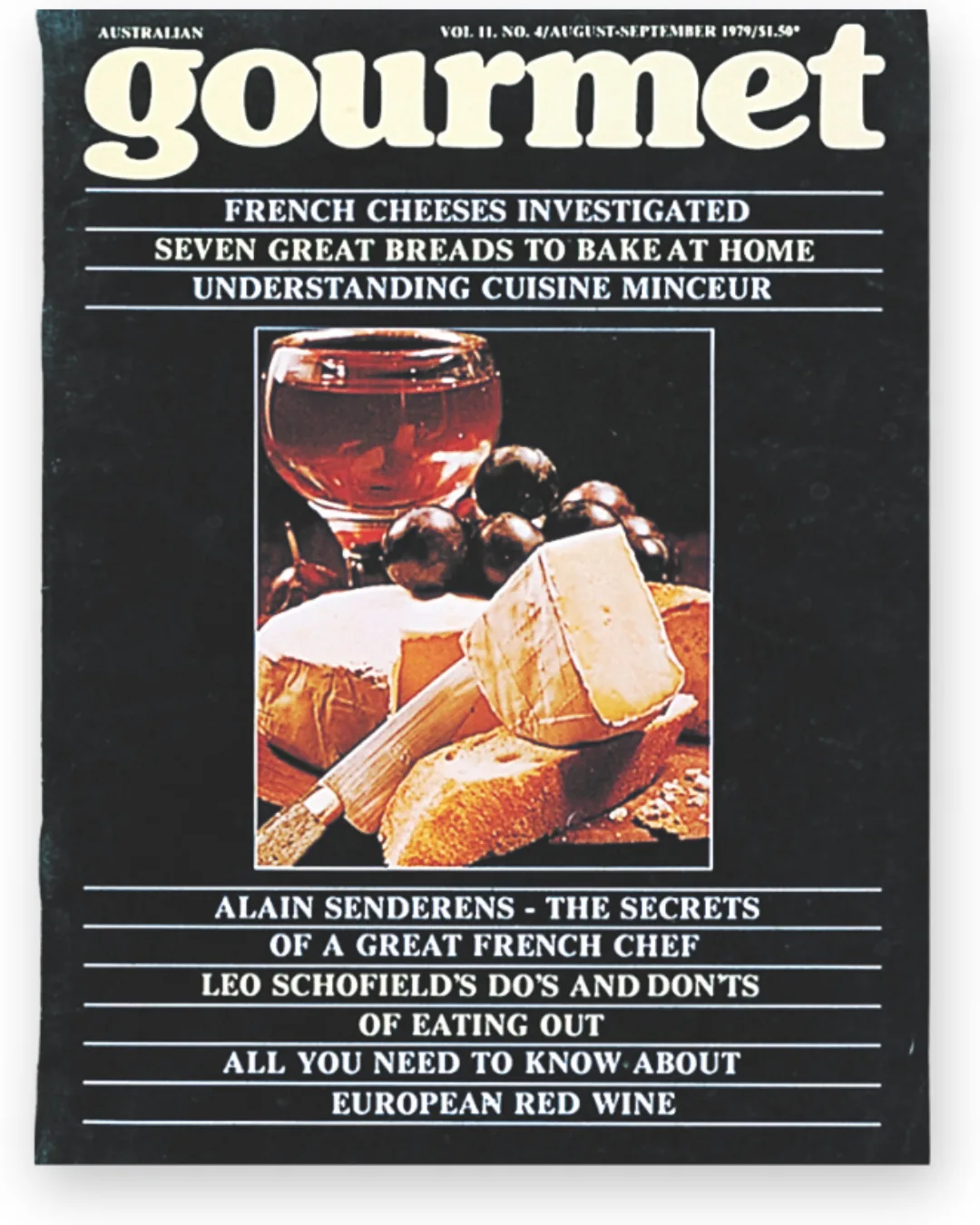
Two things jumped out at me while flipping through the May 1999 issue of Gourmet Traveller. The first was a feature on sausages declaring that they’d finally shaken off their “peasant food” reputation and were now officially chic. Personally, I’ve always considered sausages the height of sophistication even if they don’t appear on my plate or restaurant menus very often these days. The other discovery, also firmly in the chic-and-delicious category, was a story about a new Sydney restaurant called Salt. Helmed by Luke Mangan, it had just opened on the ground floor of the Kirketon Hotel in Darlinghurst, also featured in the issue. Salt and its adjoining bar, Fix, became two of the buzziest spots in town. I miss them both. But at least we still have sausages.
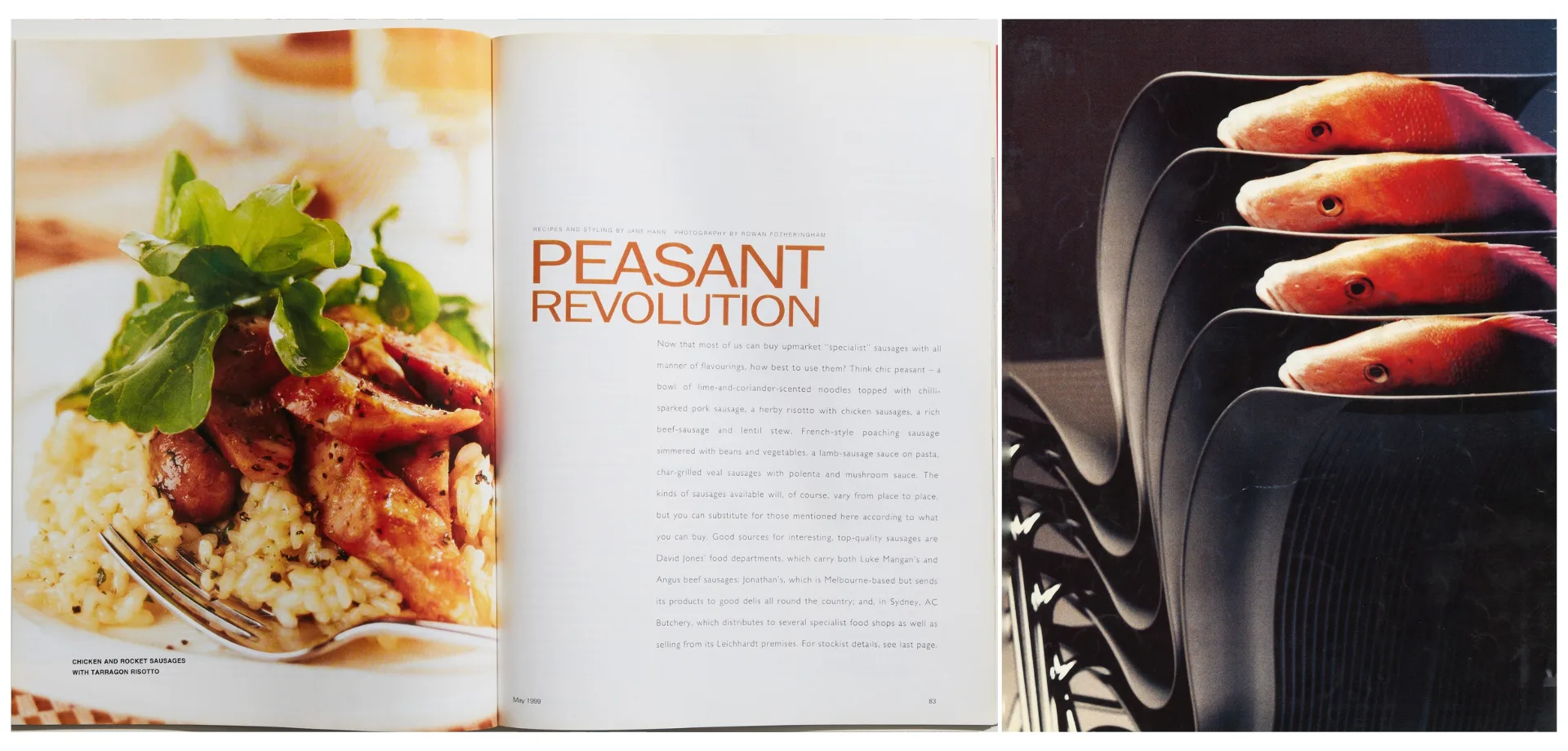
Some people believe the true measure of a restaurant’s sophistication is how much has been spent on the bathrooms. I’d argue a better benchmark is the seating – in terms of both comfort and what it says about a room’s personality. In 1999, rather than photographing the rooms or dishes that took wins in our Restaurant Awards, the editorial team showcased ingredients perched on, tucked beneath and sandwiched between the designer chairs from 10 of the featured restaurants.
It was, perhaps, a sign of the buoyant late-1990s economy that restaurants invested so heavily in iconic furniture. Gracing the cover is Arne Jacobsen’s Swan chair from Bennelong at the Sydney Opera House. Today, a Swan might cost you close to $15,000, but good design proves its worth over time: 27 years later, those same chairs remain centrestage at Bennelong, albeit reupholstered. Not everything has aged so gracefully. The 1999 Restaurant Guide carries a note alerting readers to the recent change in smoking laws, recommending diners check the policies with individual restaurants when making a booking. A small reminder of just how much dining out has changed in a quarter of a century, and how much has stayed the same.
Gourmet Traveller in the 2000s
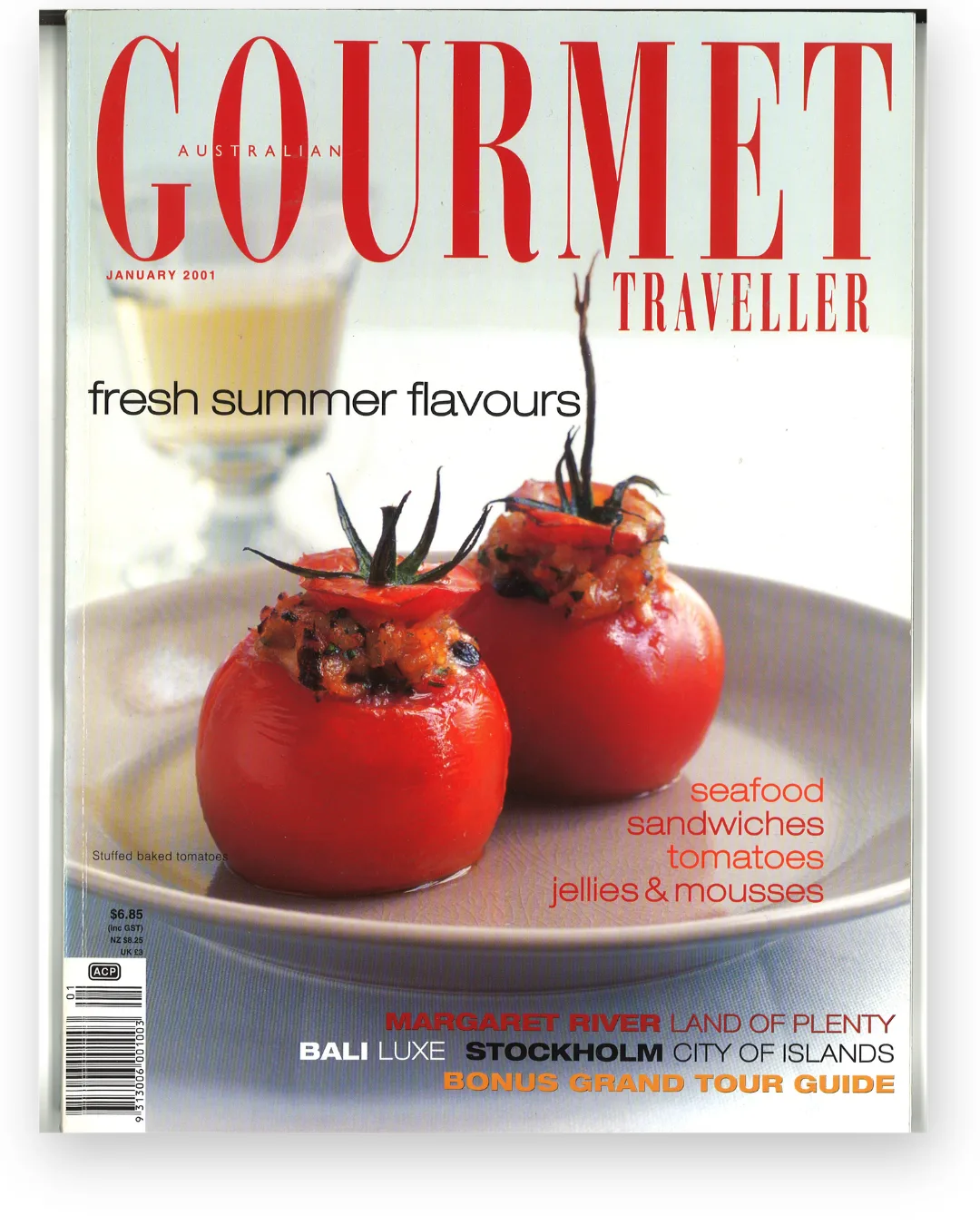
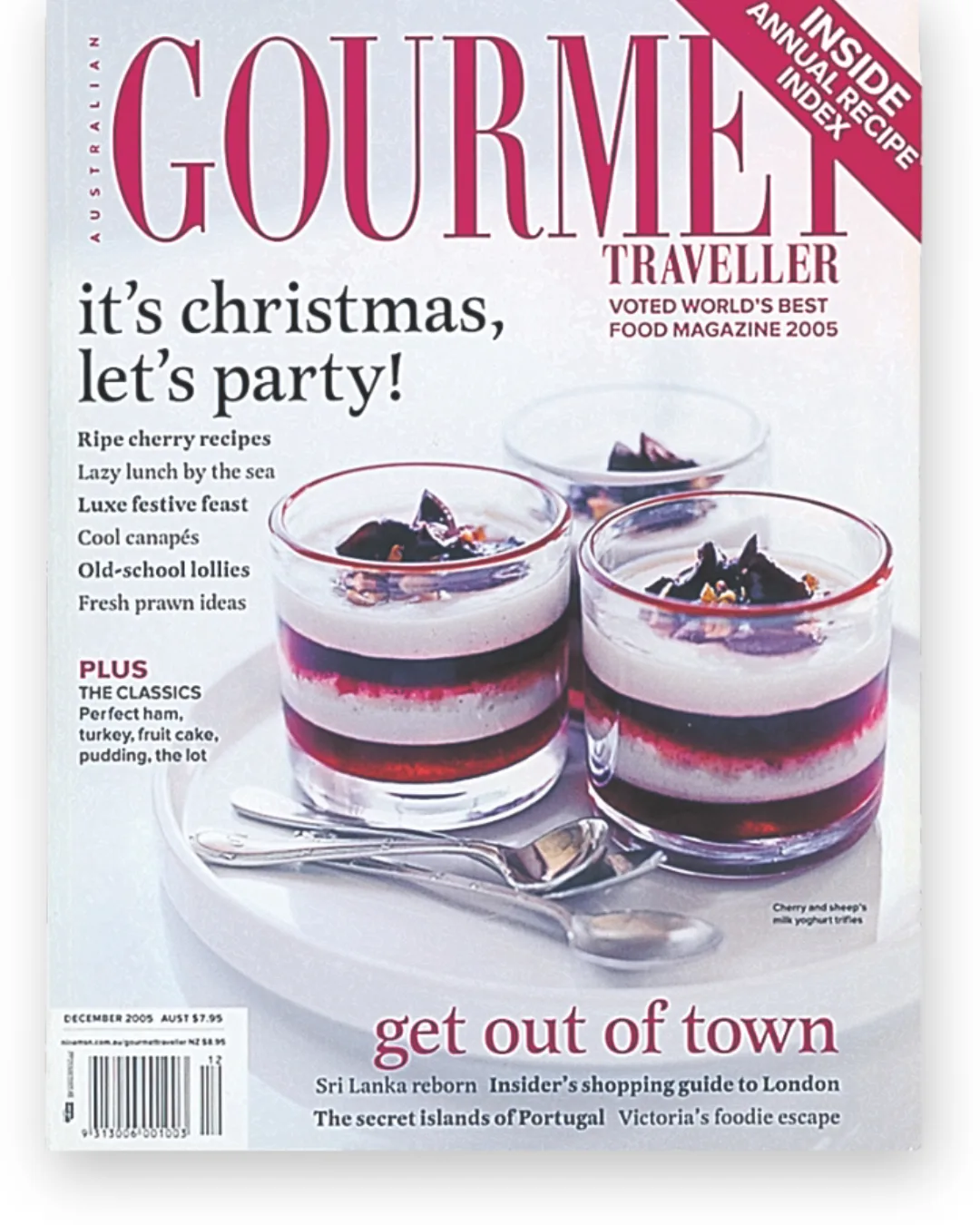
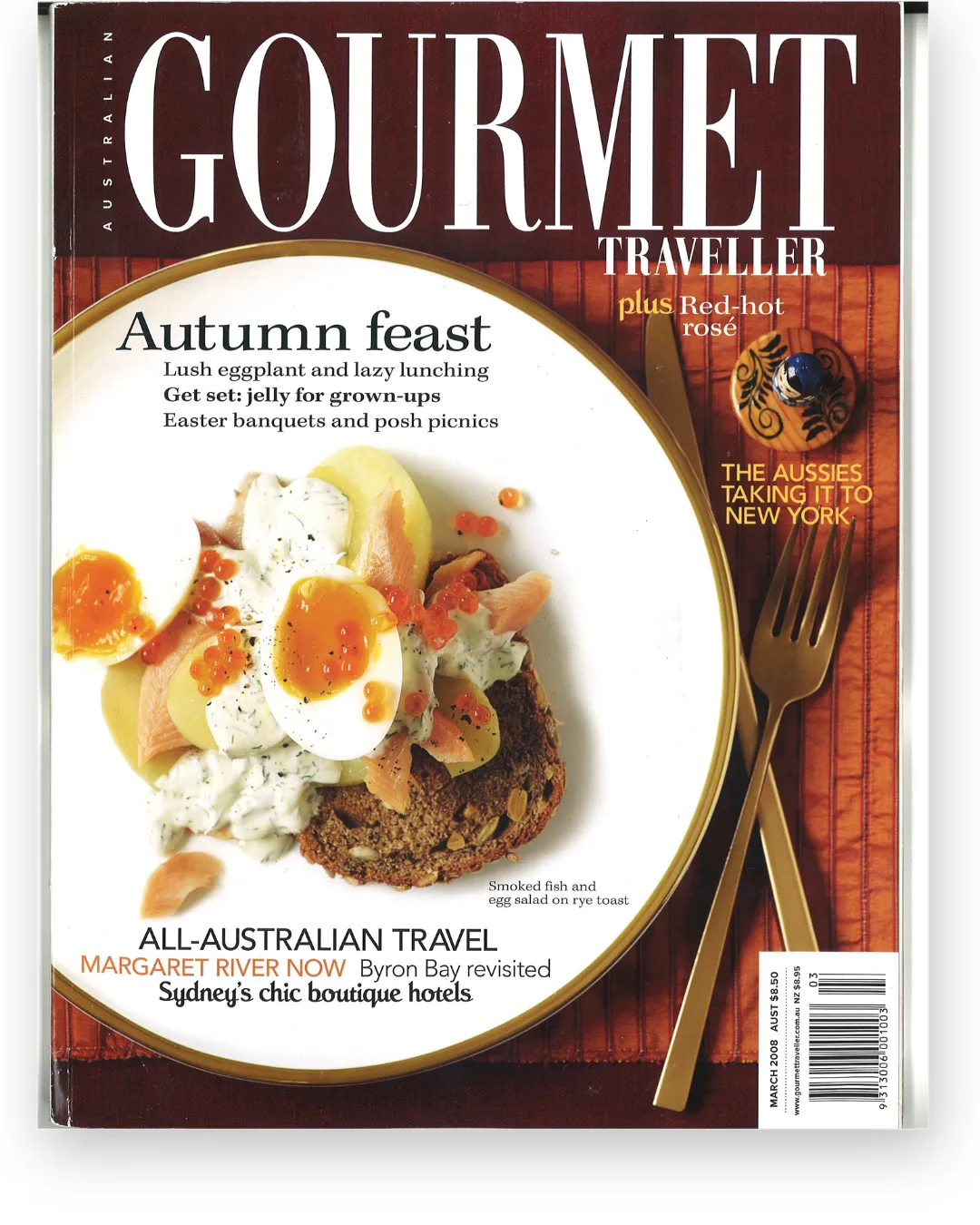
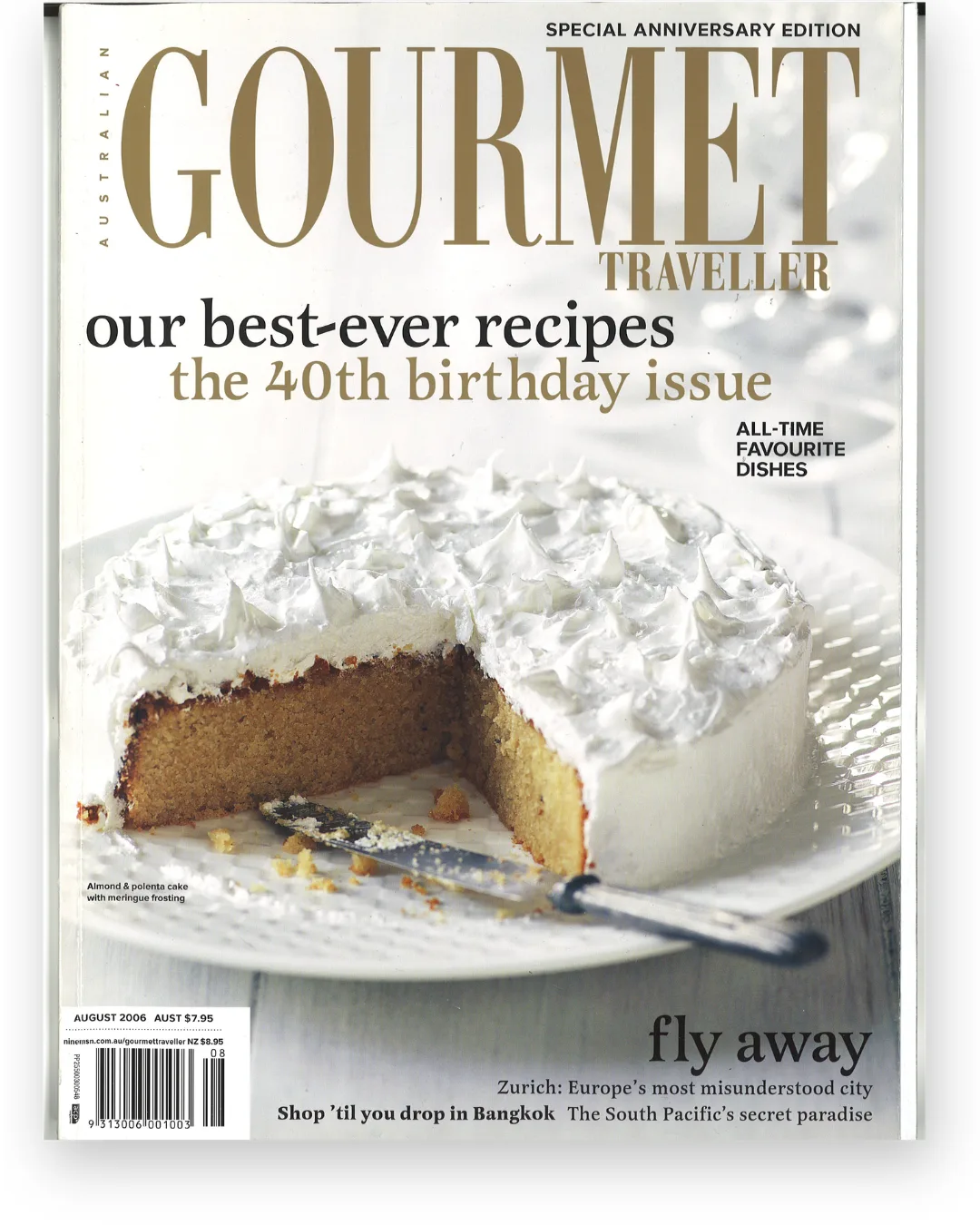
It was August 2000. The Sydney Olympics opening ceremony was only weeks away, yet strangely there wasn’t a single mention of the Games in that month’s edition of Gourmet Traveller. Instead, the magazine looked far beyond Australia’s shores. Chef Christine Manfield, then at the helm of her celebrated Sydney restaurant Paramount in Potts Point, shared a lavish Rajasthani banquet, bringing the bold flavours of India to Australian kitchens.
Elsewhere, the focus shifted south to Melbourne, where the magazine profiled six emerging chefs tipped for big futures, including Karen Martini, Simon Beaton and Christian Poulsen, showcasing some of their signature dishes.
One feature now reads as especially prescient. While Australia’s athletes were preparing to chase Olympic gold, the country’s booming coffee culture was already producing champions of its own. Among the pioneers featured was Toby Smith, then roasting coffee in the backyard of his Woolloomooloo café and store. In 2022, Toby’s Estate became part of a coffee group acquired by Japanese beverage giant UCC Holdings for a reported $229 million – proof that Smith’s coffee venture ultimately struck gold.
Subscribe to Gourmet Traveller online to enjoy magazines and digital access, read on Apple News+ or purchase at newsagents and supermarkets.