
 Roman Robroek
It’s been called the Cradle of the Reniassance, Città d’Arte, and, simply, La Bella. Florence is the birthplace of both modern poetry and merchant banking, home to some of the most important architectural and artistic works of post-medieval times, and still a nexus of liberal-arts pursuits for university attendees from around the world. Whether you first saw it as a student or a retiree, it leaves a lasting impression. The sedate curve of the Duomo, the cypresses like ink brushstrokes on the hills, the smells of old flagstones and fresh, yeasty bread – they create an indelible sense of a place whose composition is equal parts history, beauty and soul.
But is Florence still a living city? Milan is kept current by its relentless fashion and finance industries; Rome hums along as Italy’s political capital; Venice has conspired to absorb the attention of culture-makers with twin Biennales and multiple festivals. Meanwhile, in Florence, the mass tourism so welcomed by the government sometimes engenders a sense that the city could become a victim of its own illustrious patrimony.
Thanks to a confluence of bold new voices, though, Florence’s cultural landscape is being revived. The players include artists, curators, chefs and hoteliers, all vesting their efforts in helping the city recapture the title of modern creative hub – six centuries after first holding it. “What has set Florence apart in recent years has been its ability to bring together the contemporary and the historic at the highest level,” says Pepi Marchetti Franchi, director of Rome’s Gagosian gallery and a key figure in the Italian art world. She credits the vision of curators such as Palazzo Strozzi’s Arturo Galansino and Sergio Risaliti of the Museo Novecento, who have made the city appealing again to contemporary artists. Gagosian first collaborated with Risaliti on a groundbreaking 2022 show of works by Jenny Saville, which commandeered five public art spaces across the city. “Important artists are back, not only showing but often producing new works in dialogue with Florence’s history,” she says.
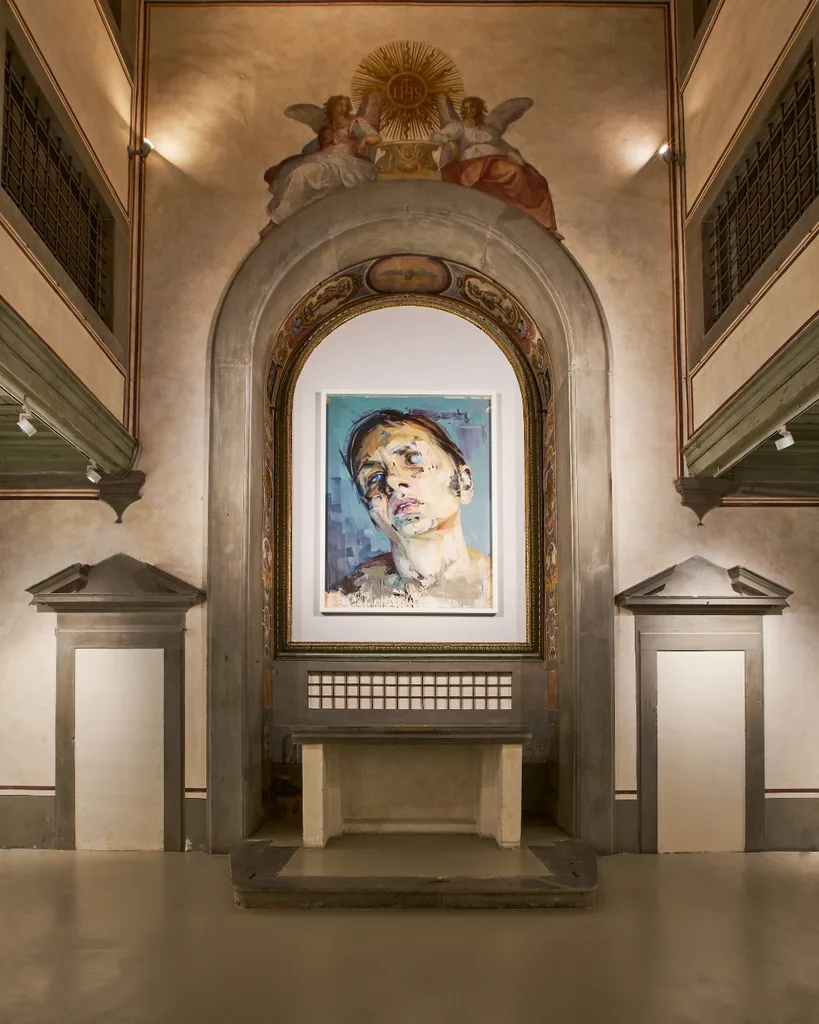
Galansino, of Palazzo Strozzi agrees: “We believe that ancient and modern art can cast a reciprocal light upon one another, especially when Florence and its enduring legacy stand at the heart of this dialogue,” says Galansino – an animated, charming and highly-visible figure on the city’s social scene, nattering away with Jeff Goldblum at one opening (the actor is a Florence resident), and scions of the Frescobaldi and Antinori families at another.
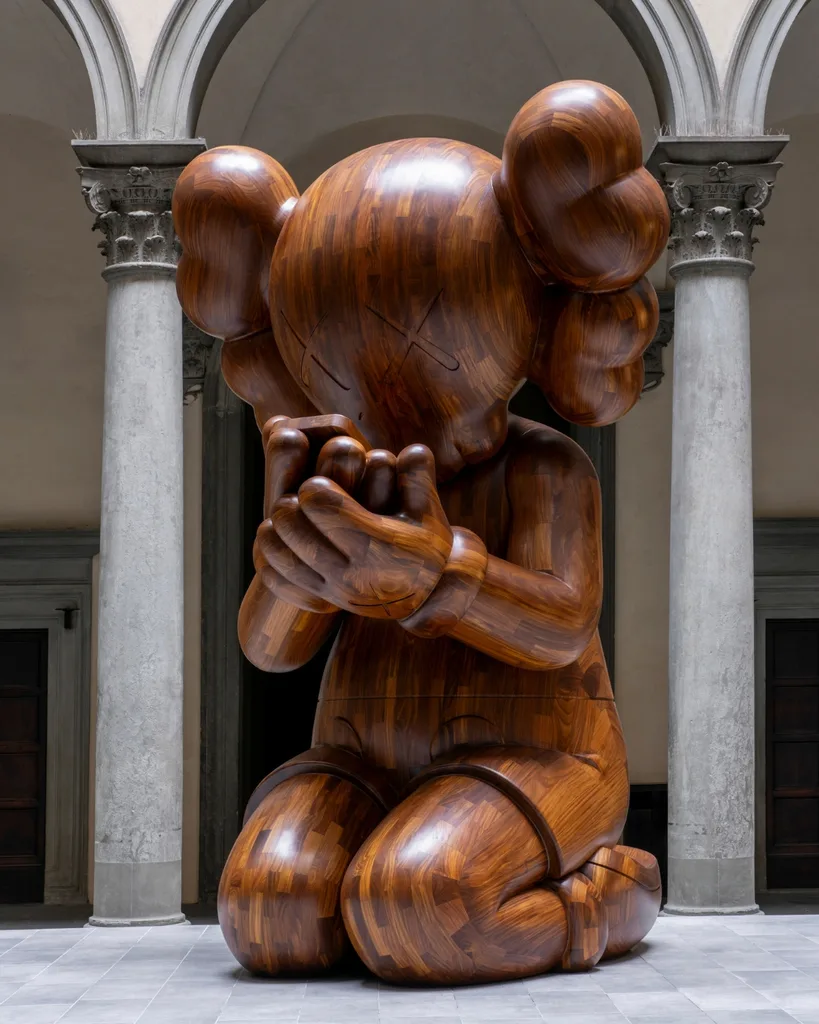
Under his influence, the museum has brought in content that is “consistently singular and unrepeatable, and that moves against the current of mass tourism. We have presented exhibitions by some of the most celebrated living artists – from Olafur Eliasson to Anselm Kiefer, Marina Abramovic to Tracey Emin. Each of them was invited to create new works in response to our history and culture, grounded in the conviction that the values of the Renaissance remain profoundly relevant today.” It’s a strategy that’s working: Palazzo Strozzi’s blockbusters have attracted day-trippers and foreign visitors alike from far beyond Italy’s borders.
“Florence used to be the Italian city I loved least,” says Emily FitzRoy, founder of exclusive specialist travel planners Bellini Travel. “It was always so busy, and never anything new or exciting going on. Now it’s become one of my favourite places, and in my eyes is really going through a renaissance.” Like Marchetti Franchi, she credits much of this newfound buzz to the efforts of its big museums; “The queues for the Fra Angelico show at Palazzo Strozzi” – the first exhibition in Florence dedicated to the 15th-century master in more than 70 years – “went round the corner. God only knows what will happen when Rothko opens there in March; I can’t wait.”
She also cites its more prosaic pioneers. “Post TikTok, a lunch booking at Cammillo or Sostanza is nigh on impossible,” she notes. But a few blocks away from famous, historic Cammillo is Dalla Lola. Opened by Matilde Pettini, the daughter of Cammillo’s owner, Chiara Masiero, it was number one on the list of places to which FitzRoy took Stanley Tucci when she plotted his Tucci in Italy Florence itinerary for him. “Matilde is young, cool, and takes an anarchic approach to Florentine cooking,” says FitzRoy, explaining that, as a fourth-generation Florentine chef, Pettini has had the confidence to turn the venerated local gastronomic canon on its head – and nothing on the menu costs more than 13 euros. “She epitomises everything I love about Florence right now.”
Another new classic, Atelier de’ Nerli, run by Daniele Cavalli (son of designer Roberto), infuses a traditional trattoria experience with elements of art, high design and theatre. Everything in the oxblood-red room was handcrafted by local artisan studios, from the Ugo Poggi glassware to the Casa Wolf textiles. The food is all clever takes on Tuscan cucina povera – elevated and elegant, but never chichi.
As Pettini and Cavalli have done with the restaurant scene, so a coterie of dynamic young entrepreneurs has made Florence’s performing-arts scene buzz again. It started in 2019 with the New Generation Festival, created by Maximilian Fane, Roger Granville and Francis Parham, three English transplants with a passion for music of all genres. The weekend-long summer festival staged live performances across sites ranging from the Palazzo Corsini al Prato to the Boboli Gardens. Whether belting out arias, riffing on jazz classics or indulging in a bit of burlesque, every performer was under the age of 35. The Festival was a critical success for several years, the trio following it up by establishing Fondazione Mascarade, a training program in music, language, drama and movement, which Parham and Granville now co-direct. Its students perform not just across Florence but in Venice’s Teatro La Fenice and Heidelberg’s Theater und Orchester. Throughout the year, the foundation stages concerts and performances in churches, gardens and private palazzi across town – devotees follow the web site to stay abreast of what’s on.
Mascarade co-founder Fane, meanwhile, has opened House of Nine with his Florentine wife, Ginevra Moretti. Located a stone’s throw from the Basilica of San Lorenzo, the boutique hotel and member’s club has a subterranean restaurant, Daisy’s, which hosts performances of all sorts. Several nights a week, chic young Florentines along with expats and their visiting friends are treated to live music – jazz, bossa nova, classic big-band sets – to accompany their tortelli in salsa di pecorino. “Having lived here for several years, it was always apparent to me the depth of Florence’s potential,” says Fane. “We opened Daisy’s in late 2023, and today it has 80 musicians working all over Italy, producing more than 200 shows a year.” The nation has always had a thriving arts-entertainment sector, but now, he says, “Florence is really at its heart.”
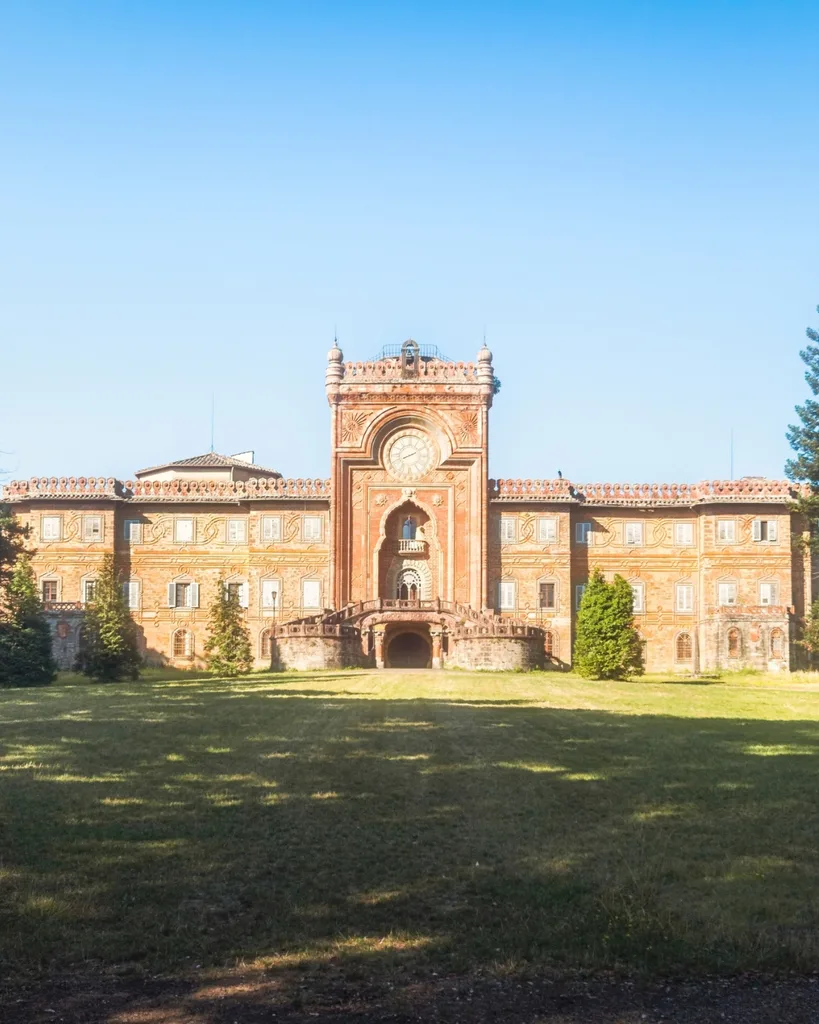
What’s next for the city in 2026? Possibly a shift of focus just outside of town. Fane and Moretti recently purchased Castello di Sammezzano, about 24 kilometres southeast of Florence. Standing on a medieval foundation which itself was built atop Roman ruins, it’s a surreal, technicolour fever dream of a building, reimagined by the reclusive Florentine nobleman who inherited it in the mid-19th century, filling its dozens of rooms with ornate frescoes, tiling and gilt. It’s been abandoned, and decrepit, for at least 30 years, and at present it’s not precisely clear what the couple intends to make of it, whether a hotel, museum, events space, or performance and arts venue – or a bit of everything. It’s clearly a space worth watching; and in the meantime, there’s plenty to keep one busy in Firenze, La Bella.

Related stories
Native ad body.

Native ad body.
Native ad body.
Why Malta should be your next Mediterranean escape