Vince Yeung
In 2021, Gucci Osteria da Massimo Bottura opened in Tokyo’s high-end Ginza shopping district, under the direction of the chef-owner of Modena’s Osteria Francescana (twice named The World’s Best Restaurant). The menu, described as a “poetic voyage from Italy to Japan,” lists tagliatelle with wagyu ragout, Bruschetta Reimagined: A Noble Tale (whelk, tomato and white bean miso), and a Parmigiano-Reggiano cheesecake. The pinnacle of Italian dining in Japan, it was quickly awarded a Michelin star.
Japan’s local take on Italian food has its own name: itameshi. A portmanteau of “Italian” and “meshi” meaning meal, itameshi first took root more than a century ago before gaining popularity after World War II. Classic Italian formats were reinvented according to Japanese palates and produce, resulting in udon carbonara and ketchup-based Napolitan spaghetti. Chain restaurant Saizeriya has around 1000 locations in Japan, all serving itameshi icons like creamy cod roe spaghetti, Bolognese-topped baked rice, and salads adorned with perfect cherry tomatoes and strips of seaweed.
When it comes to food, for two countries that feel so culturally distinct, there are some interesting similarities between Italy and Japan. Both take considerable pride in their distinct regional cuisines. Sprinkled from the mountains to the coastline, both have rich histories of farming, fishing, foraging and preserving. Japan has sashimi, kakigori and mentaiko; Italy has crudo, granita and bottarga. Both cultures are renowned for their produce and storied methods of production; Japan’s Ministry of Agriculture, Forestry and Fisheries designates around 170 items under a Geographical Indication, covering Kobe beef, Aomori black garlic and Monobe yuzu. In Italy, various systems protect Parmigiano-Reggiano, Pecorino Romano and Prosciutto di Parma.
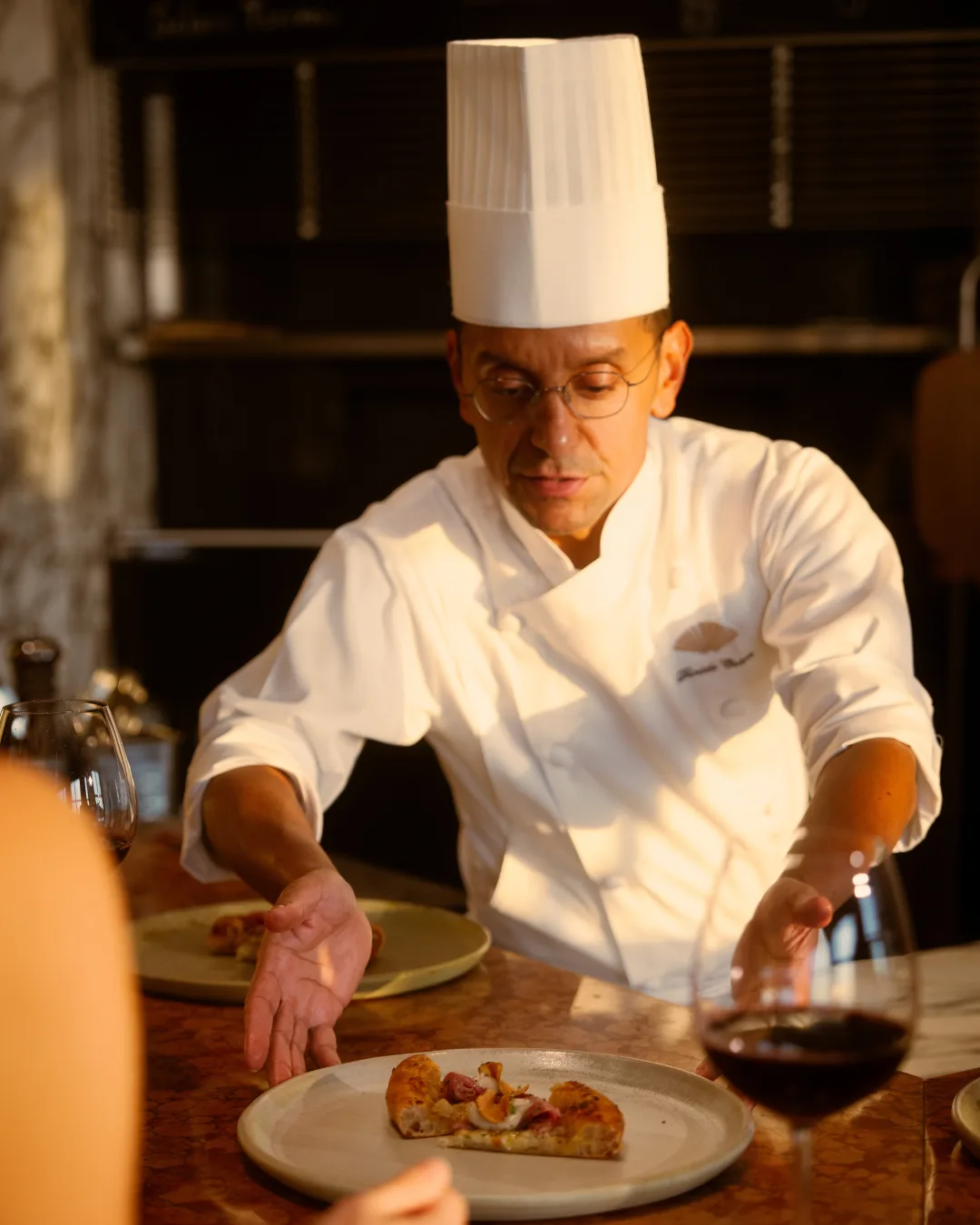
When you look closely, Japan’s appreciation of Italy – and vice versa – makes perfect sense. In Japan, pizza is a natural part of the love affair, having moved beyond itameshi’s origins of “making do” with Japanese ingredients to its own heights. In fact, according to the Italian organisation 50 Top Pizza’s 2025 list, the second-best pizza restaurant in the world is on level 38 of the Mandarin Oriental, Tokyo.
At The Pizza Bar on 38th, executive chef Daniele Cason (originally from Rome) serves a seasonal omakase-inspired pizza experience. His dough made with organic Italian flour is fermented for 48 hours, then topped with Bronte pistachio and raw Japanese spot prawns; king crab with Fontina cheese, Brussels sprouts, white beans and short-spine uni; or Tuscan-style cacciucco sauce, flaked cod, abalone, house-made bottarga, Gorgonzola DOP and tarragon. More top spots include Savoy (where pies come topped with Kirishima pork salsiccia or bluefin tuna), intimate Kyoto restaurant Monk (which featured in Chef’s Table: Pizza on Netflix), and Pizza Studio Tamaki, which opened in Sydney in May (joining locations in Singapore, Thailand, the Philippines and, soon, New York City).
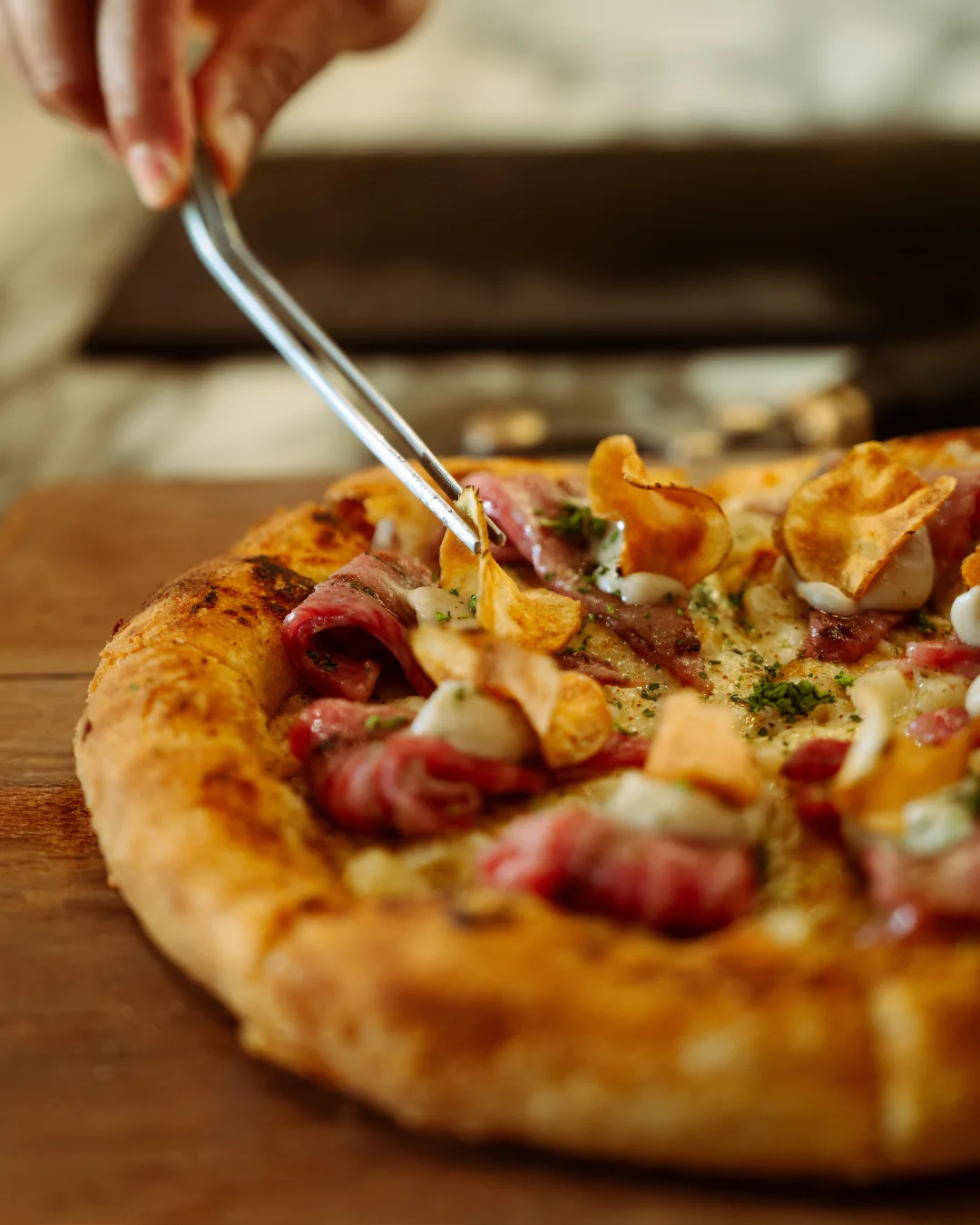
Owner and pizzaiolo Tsubasa Tamaki worked at Savoy and the 30-year-old Tokyo pizzeria Seirinkan before he opened the equally esteemed Strada – all known for their renditions of Tokyo Neapolitan pizza. For Tamaki, his Pizza Studio is more about chasing the idea of perfection than cultural accuracy. “People might think what I do looks like Neapolitan style,” he says, “but what I’m doing is a Japanese style. I didn’t set out to faithfully copy Naples – I’m creating something rooted in my own sensibility.”
While he uses a highly guarded flour blend and imported cheese at all locations, Tamaki says yuzu, wasabi and sansho pepper are some of his favourite Japanese ingredients to apply to his pies. “I think our pizza culture comes from a sensitivity to flavour, texture and aroma,” says Tamaki. “In Japan, providing that level of detail in everyday dining is simply expected.”
For Italian-born Erik Ortolani, executive chef of Sydney’s Itō, Japanese food was always a source of excitement. “Because I grew up near Milan, it was special to go into the city and try jellyfish salad, sushi and stuff like that,” he says. “I know everyone romanticises Italian food, Italian culture… but it felt very claustrophobic and boring for me. Asian food was always an escape.” Ortolani began his culinary career in Milan and worked at what is almost certainly the world’s best-known Japanese restaurant chain, Nobu, before moving to Australia and ultimately becoming head chef at modern Japanese restaurant Cho Cho San in Sydney. At Itō, he aims to deliver an “Italian izakaya.”
“Japan and Italy are both very produce focused,” says the chef. “Their raw materials are so good, you don’t have to do much to them. They both take a very simple approach in terms of how many ingredients you see on the plate, and that’s how I like to develop a menu.” In Tokyo, he found inspiration at Daikanyama’s Falò. “They’re all Japanese and making Italian food. The menu has pictures, so I wasn’t really expecting anything but I had the best food. Very simple things; a white peach and eggplant salad was incredible.”
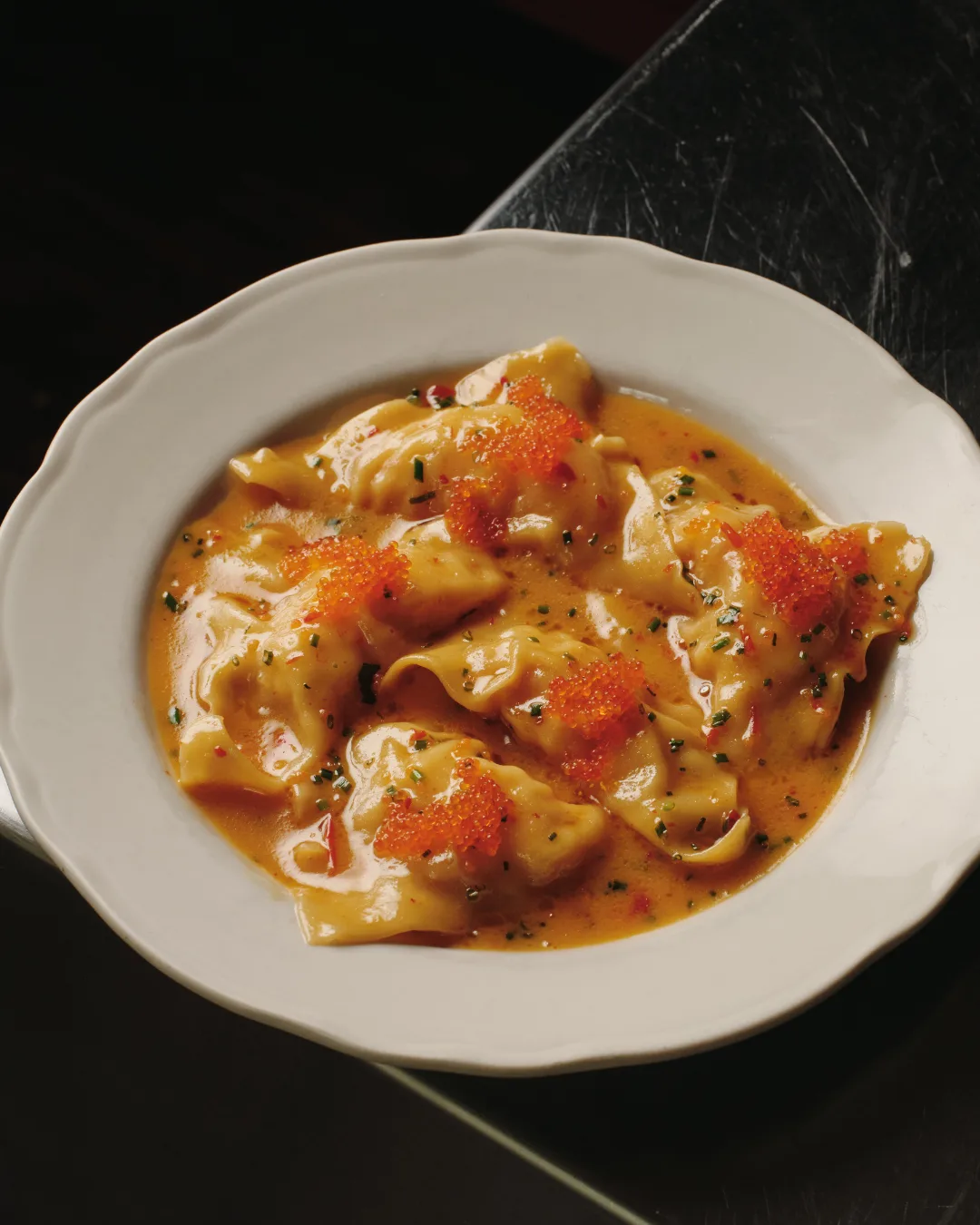
Seafood is a natural place for the crossover to happen. “I am always quite seafood-focused because that’s the kind of Italian food I’m drawn to: coastal Ligurian food or Puglian food,” says Ortolani. At Itō, ravioli filled with prawn and scallop is the perfect union of both food cultures. “On that plate you have scallop, prawns, tobiko and a dashi stock mixed with butter,” he says. “The dashi is subtle, and the garlic and chilli is a very Italian combination. The dish is so delicious, and uses all the tools that we have on the board.”
The love affair is just as strong on the other side of the world. In Milan, chef Yoji Tokuyoshi – who worked at Osteria Francescana for years, eventually becoming sous chef – now runs a clutch of popular Japanese dining concepts. They include cross-cultural bakery and kitchen Pan (think Japanese curry-filled bomboloni, or cinnamon and miso cube-shaped croissants), casual eatery Katsusanderia, and modern izakaya Bentoteca, where you might dine on honey shokupan with chicken liver pâté and white miso, or grilled sake-marinated pigeon with Calabrian sardella. Tokuyoshi also owns Tokyo’s Alter Ego, where you’ll find the inverse: Italian food faithfully delivered with the best Japanese ingredients.
In Rome, the menu at Kobe-born Koji Nakai’s restaurant Nakai opens with a letter from the chef: “Of course I respect the traditions, but I like using Italian ingredients that don’t exist in Japan, for example cheese, olives and anchovies… not mentioning tomato: a 100 per cent natural umami.”
Perhaps it should come as no surprise that itameshi is now spreading – London’s Angelina recently expanded to a second location for guests chasing dishes like agretti tempura with bottarga and parmesan. Los Angeles loves one-star Japanese-Italian restaurant Orsa & Winston; respected chef Eric Fralick opened Kinjo in Tampa last August (inspired by his favourite itameshi restaurant in Shizuoka). In Australia, itameshi restaurants like Ten Minas in Perth are joined by Sydney’s LuMi Dining, where Federico Zanellato, an Italian chef who became familiar with cooking Japanese at the three-Michelin-star Nihonryori Ryugin, blends both cuisines.
“My dad came [to Itō] and, honestly, it was the scariest experience,” admits Ortolani. “I was like, ‘Oh my God, you’re going to hate it.’ But he actually loved it – and I could tell he wasn’t just saying that.” Similarly, Tamaki recalls a group of Italians who were astounded by his work. “‘This is completely different from how pizza is made in my country,’ they said. They ate two pizzas each.”

Related stories
Native ad body.
Native ad body.


Native ad body.